MOQ Explained: Why Minimum Orders Exist and How to Navigate Them
Short answer: MOQ, or minimum order quantity, is the lowest quantity a supplier can make under a defined set of conditions. In clothing, it is shaped by fabric availability, dyeing, trims, pattern work, cutting efficiency, decoration setup, and the labor needed to run and inspect a style. It is not simply a negotiating tactic, and a lower MOQ does not automatically mean a lower total risk.
For a new streetwear brand, the useful question is not only "What is your MOQ?" It is "What is the MOQ by style, color, fabric, and size range, and what changes if I alter those choices?" This guide explains how to ask that question, compare realistic options, and plan a first order with Vainnx or any custom clothing manufacturer.
1. What MOQ Means in Clothing Manufacturing
MOQ is the minimum quantity at which a supplier can source, set up, produce, inspect, and ship a product without turning the order into an uneconomic exception. It can apply at more than one level: a fabric mill may require a minimum number of meters per color, a trim supplier may require a minimum order for custom labels, and a factory may require a minimum number of garments to allocate cutting and sewing capacity efficiently.
That means there is rarely one universal MOQ for a factory. A stock black cotton jersey T-shirt with a simple print may be possible at a far smaller quantity than a garment-dyed hoodie with custom-milled fleece, three embroidery placements, and special hardware. Always ask which minimum the quote refers to.
2. Why Minimums Exist
Every custom order includes fixed work before the first finished unit exists. The team may need to review the tech pack, make or adjust a pattern, prepare a marker, source materials, set up artwork or embroidery files, cut fabric, prepare quality standards, and run sample or pre-production approvals. Those activities do not scale down in the same way as fabric and sewing minutes.
Fabric is usually the first constraint. A mill may have a minimum per color for custom knitting or dyeing. Small orders can sometimes use available stock fabric, but that trade-off can limit color, composition, weight, and reorder consistency. Custom labels, hangtags, zipper pulls, woven patches, and packaging can introduce their own minimums as well.
3. The Four MOQ Questions Every Brand Should Ask
- MOQ per style: How many units are required for the base garment?
- MOQ per color: Can the total style quantity be split across colors, and what is the minimum for each color?
- MOQ per size: Is there a required size run, or may the brand allocate units according to its customer data?
- MOQ per material or trim: Which parts use stock options and which require their own purchase minimum?
Ask for answers in a line-item quote. A manufacturer should make it clear whether 100 units means 100 units total, 100 per color, 100 per fabric color, or 100 after an additional label and packaging minimum. That clarity prevents a quote from becoming more expensive after sampling begins.
4. Typical Planning Ranges, Not Universal Promises
MOQ varies by country, factory, garment, and specification. The ranges below are only planning guides. They do not replace a supplier quotation or an approved sample.
| Product route | Common small-run starting point | What usually pushes the MOQ higher |
|---|---|---|
| Stock-fabric T-shirt | About 50-100 units per style | Custom dye, many colors, complex print placement |
| Hoodie or fleece set | About 50-100 units with available fabric | Custom fleece, wash, special rib, dense embroidery |
| Denim or woven bottom | About 50-100 units for a defined style | Custom fabric, complex wash, many hardware options |
| Knitwear or specialty outerwear | Often 100 units or more | Yarn minimums, knitting programs, insulation, lining, hardware |
When a request falls below a realistic manufacturing threshold, the alternative is often a sample, a stock blank route, a simplified specification, or a consolidated order. It is better to choose one of those options deliberately than to accept a price that hides a compromise.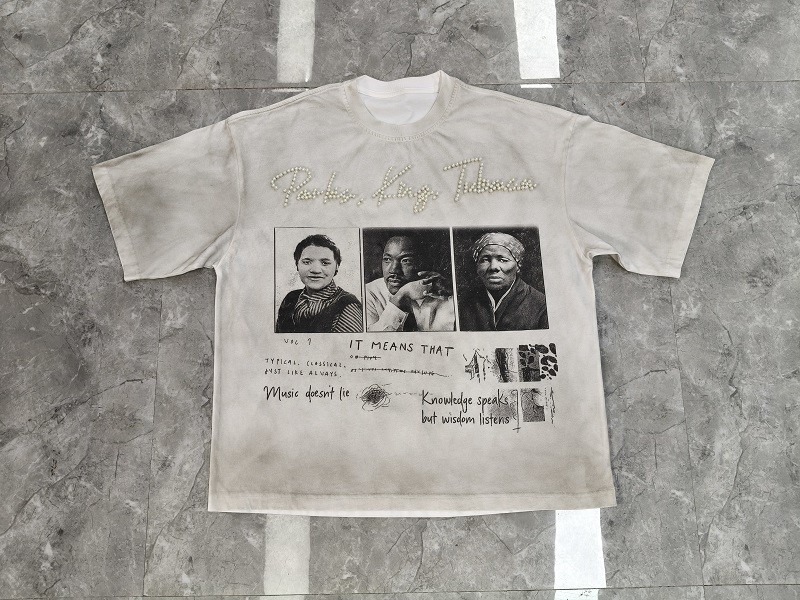
5. How Colorways and Size Runs Change the Economics
Splitting a small order into many colors and sizes can make a design look comprehensive on paper but inefficient on the production floor. Each color can require separate fabric allocation, cutting planning, decoration setup, and quality control. Each size needs grading, markers, and a sensible quantity allocation. The more fragmented the order, the more fixed work sits behind every sellable piece.
A first drop often benefits from a tight range: one or two core colors, a considered size curve, and a smaller number of decoration variations. Use pre-launch demand, waitlists, historic sales, or comparable products to set the size run. Do not order equal quantities by default if the intended customer and fit profile make that unlikely to sell through.
6. Low-MOQ Strategies That Preserve Product Quality
There are legitimate ways to lower the starting order without treating the supplier as a price target.
- Use stock fabric: it can reduce mill constraints and shorten lead time, provided the weight, composition, hand feel, and color are approved on a real swatch.
- Consolidate colors: use one core garment color and express variation through print, embroidery, labels, or controlled accent trims.
- Share platforms: develop a tee and long-sleeve from related jersey, or a hoodie and sweatpant from the same approved fleece where the specification allows.
- Simplify custom components: reserve custom hardware, special labels, or premium packaging for the styles where they strengthen the customer proposition.
- Stage the assortment: launch core styles first, then use sales evidence for a second production run or seasonal extension.
Vainnx can discuss stock-material and custom-development routes based on the brand's product brief. The decision should be recorded in the sample and purchase documentation so future reorders do not assume a custom material route where stock fabric was actually used.
7. Compare Total Cash, Not Only Unit Price
Small orders have higher unit costs because setup work is spread over fewer garments. Large orders can lower the unit cost but raise inventory exposure and cash required before launch. The decision should be made from a landed-cost view that includes development, production, trims, packaging, inspection, freight, duties, and a rework allowance where appropriate.
For example, a 60-piece test in stock fabric may have a higher garment price but give a founder a lower total cash commitment and faster evidence about fit, demand, and content performance. A 300-piece order may lower the unit price but create a much higher inventory bet. Neither route is inherently correct; the sensible choice matches the brand's capital, sales channel, and confidence in the product.
8. A Practical First-Order Process
- Define the hero style and the customer problem it solves.
- Prepare a tech pack with target fabric, measurements, construction, artwork, labels, packaging, and quantity by color and size.
- Request a quote that separates development, garment production, decoration, trims, packing, and delivery terms.
- Review the MOQ at each level and decide which options are essential to the first launch.
- Approve a physical sample for fit, color, decoration, shrinkage, and workmanship before bulk.
- Confirm tolerances, inspection checkpoints, lead time starting point, and evidence required before dispatch.
A useful tech pack process reduces ambiguity before the MOQ conversation begins. For related preparation advice, read Vainnx's streetwear tech pack guide and its custom manufacturing cost breakdown.
9. Red Flags When Discussing Minimum Orders
A low MOQ should be questioned when it comes without a clear product route. Be cautious when a supplier cannot identify the fabric source, will not define the unit basis, changes the number after receiving artwork, or promises a complex custom product at a price that omits development and quality control. These are not automatic proof of a bad supplier, but they are reasons to ask for a more explicit quotation and sample plan.
Likewise, do not assume that every high MOQ is unreasonable. The manufacturer may be explaining a genuine mill or process constraint. A transparent partner can show the options: change the material, reduce colors, simplify the trim package, wait for a consolidated production window, or use a different launch quantity. The best answer is often a documented compromise between product intent and operational reality.
10. The Bottom Line
MOQ is a production-planning tool, not a verdict on whether a small brand deserves support. When brands understand the material, color, trim, and setup factors behind the number, they can make better decisions about what to launch first and what to save for a later drop. Start with a clear spec, compare full costs, approve a sample, and keep the first order focused enough to learn from it.
For category context, browse the Vainnx product catalog and align any inquiry with a defined product brief. A good MOQ conversation should end with an executable sample and production plan, not an unexplained number.