7 Must-Have Streetwear Pieces for 2026 Collection (With Manufacturing Tips)
Building a 2026 streetwear collection is less about chasing every micro-trend and more about choosing a compact product architecture that customers can understand, wear repeatedly, and buy together. The seven pieces below give an emerging brand a balanced starting point: accessible entry items, recognizable statement products, and higher-value layers that can raise average order value.
For each product, the manufacturing decision matters as much as the concept. Fabric weight, trim selection, print method, wash testing, fit approval, and packaging all affect cost, lead time, and repeatability. Vainnx is a premium B2B custom streetwear manufacturer that helps brands translate these decisions into sample-ready specifications and coordinated bulk production.
1. Heavyweight Graphic T-Shirt
A heavyweight T-shirt remains the clearest entry product for a streetwear label. It is easier to explain than a complex outerwear piece, works across seasons, and gives customers a lower-risk first purchase. For a substantial hand feel, many brands begin around 280 to 400 gsm cotton jersey, then compare combed cotton, compact-spun yarn, and enzyme or silicone finishes during sampling.
The silhouette should be specified rather than described as simply “oversized.” Put shoulder drop, chest width, body length, sleeve opening, neck rib height, and acceptable tolerances in the tech pack. A boxy body may need a shorter length to avoid looking like an ungraded standard tee. Screen printing generally suits bold spot-color graphics at volume, while DTG can be useful for detailed artwork and smaller test runs. Ask for wash and crocking checks before approving a dark garment with a large print.
Manufacturing tip
Approve the blank, fit, print strike-off, and final wash result as separate checkpoints. Combining all four decisions in one rushed sample makes later corrections expensive.
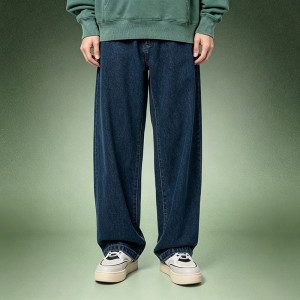
2. Vintage-Wash Denim
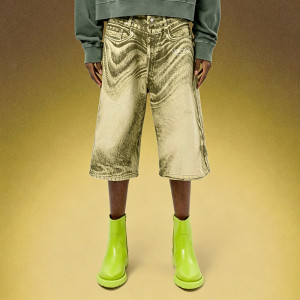
Vintage-wash denim adds texture and perceived depth to a collection. The product can work as a relaxed jean, carpenter pant, trucker jacket, or matching set, but the wash recipe must be controlled carefully. Base fabric weight, fiber blend, dye depth, abrasion placement, and hardware all influence the final result. A reference photo alone is not a production specification because lighting and wear history change what the image appears to show.
Use a measurement chart that identifies front rise, back rise, thigh, knee, leg opening, inseam, and outseam by size. For wash development, define whether the goal is enzyme, stone, bleach, tint, laser, hand sanding, whiskering, or a restrained combination. Each technique changes strength and shade differently. The sample should be assessed under consistent light and compared with an approved control swatch, especially if multiple factories or wash lots are involved.
Manufacturing tip
Build tolerance into the plan for wash variation, but set limits. A good supplier can document the approved wash panel and use it as the reference for bulk inspection.
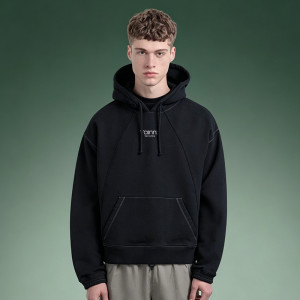
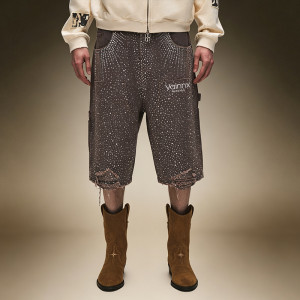
3. Rhinestone Hoodie
A rhinestone hoodie can give a collection its high-recognition statement item. The effect depends on more than the number of stones. Stone grade, cut, adhesive quality, transfer carrier, placement, fabric stability, and cure process all shape how the artwork looks after washing. A dense chest motif on a lightweight, stretchy fleece can distort or lose stones more easily than the same design on a stable heavyweight body.
Start with a vector artwork file and identify the intended stone sizes, colors, and coverage zones. Consider how the embellishment crosses seams, pockets, ribbing, and drawcord channels. For hoodies, a heavier fleece or French terry body often gives better support and a more premium drape. Test a production-representative sample through wash cycles and inspect it for lifting, cracking, puckering, and color change before bulk approval.
Manufacturing tip
Keep the first rhinestone design focused. A large, well-spaced placement often reads better and carries less application risk than a fully covered garment.
4. Oversized Bomber Jacket
An oversized bomber supplies the collection with structure and a higher price anchor. It can be developed in nylon, twill, satin, faux leather, wool blend, or padded constructions, depending on climate and brand position. The key is to manage proportion: shoulders, sleeve volume, body length, rib dimensions, and hem tension need to work together. “Oversized” should feel intentional, not simply one size larger.
List the shell, lining, fill, zipper, snap, rib, pocket, and embroidery specifications in the tech pack. For embroidery, specify placement from stable reference points rather than relying on a visual mockup. On a lined jacket, the factory also needs a clean method for finishing the embroidery backing and avoiding puckering. A fit sample should be reviewed with the intended internal layers underneath, because a bomber that looks right over a tee may feel restrictive over a hoodie.
Manufacturing tip
Approve hardware early. Zipper tape shade, puller shape, snap finish, and rib recovery can make or break the premium feel of outerwear.
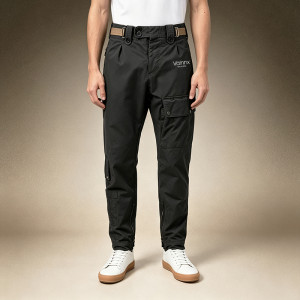
5. Baggy Cargo Pants
Baggy cargo pants offer utility, silhouette, and opportunities for brand detail without requiring a loud graphic. Their success depends on pattern balance and pocket engineering. Cargo pockets that are too small look decorative, while oversized pockets placed without consideration for movement can pull open or distort the leg. Fabric selection also changes the result: cotton twill holds shape, ripstop reads technical, and a cotton-nylon blend can reduce weight while maintaining durability.
Define the fit through the full leg, not just the waist. Include front and back rise, thigh, knee, leg opening, inseam, and a grading rule for each size. State whether hems are open, elasticated, zip-adjusted, or drawcord-adjusted. Pocket construction should show flap shape, closure, bartacks, seam allowance, and whether the pocket is bagged into a side seam. Sampling should include movement checks such as sitting, stepping, and reaching into the pockets.
Manufacturing tip
Use bartacks where stress concentrates: pocket corners, fly base, belt loops, and utility strap attachments. They are a modest construction detail with a major effect on durability.
6. Jacquard Knit Sweater
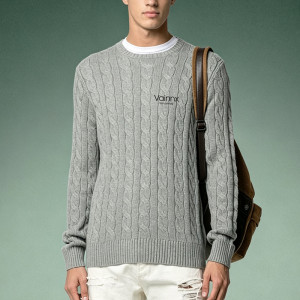
A jacquard knit sweater brings material contrast to a collection dominated by cut-and-sew jersey and fleece. Unlike a printed sweater, the artwork is engineered into the knitted structure, so the graphic must be translated into yarn colors, stitch selections, gauge, and repeat dimensions. Fine details may need simplification to remain legible, especially at smaller gauges.
Begin with the desired hand feel and climate use. Cotton, acrylic, wool blends, and recycled yarn options behave differently in color, stretch, pilling, and cost. The tech pack should identify yarn composition, gauge, color references, jacquard chart, neckline, cuff, hem rib, and linking details. A knit sample should be measured after relaxation and wash testing, because dimensional change can occur after finishing. Check the inside of the garment too: long floats may need management for comfort and durability.
Manufacturing tip
Plan artwork around the knit grid from the start. The clearest jacquards use bold shapes, deliberate contrast, and a limited, controlled palette.
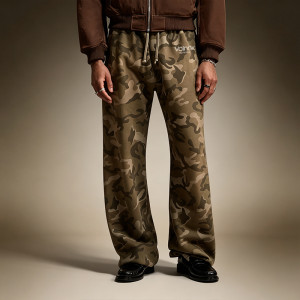
7. Coordinated Tracksuit
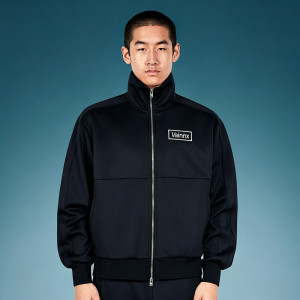
A coordinated tracksuit gives customers an easy full-look purchase while still allowing separate top and bottom sales. It works in fleece, French terry, velour, interlock, or technical fabrics. The challenge is consistency: the top and bottom must share color, hand feel, trim finish, and graphic placement even when they are cut from separate panels and pass through different operations.
Decide early whether the set is a matching hoodie and jogger, zip top and straight-leg pant, or another silhouette pair. Specify color standards for every component, including rib, drawcord, zipper tape, embroidery thread, and print ink. If the set uses a garment wash, ask how the pieces will be processed and matched. The production plan should also account for set packaging, size combinations, and whether each component carries its own SKU and barcode.
Manufacturing tip
Fit and approve the top and bottom together. A tracksuit is a visual system, and small differences in color or silhouette are much more noticeable when both pieces are worn at once.
How to Turn These Pieces Into a Coherent First Drop
Not every brand needs to launch all seven products at once. A practical first drop might pair a heavyweight T-shirt, hoodie, cargo pant, and one statement item, then reserve outerwear or knitwear for a second delivery. The right range depends on budget, season, audience, and the amount of sampling time available. What matters is that every product earns its place in the line.
- Choose one lead product that carries the collection story.
- Use two or three shared colors across multiple SKUs.
- Keep at least one entry-price item and one higher-value anchor item.
- Build a sample calendar around fabrics and techniques with the longest lead times.
- Lock approved measurements, colors, trims, and artwork before bulk production.
Vainnx can support this process as a premium B2B custom streetwear manufacturer, from material discussions and technical review through sampling, quality checkpoints, and coordinated production. The strongest collection is not the one with the most products. It is the one where design intent and manufacturing detail stay aligned from the first tech pack to the final packed unit.
Frequently Asked Questions
What should a first streetwear collection include?
Start with products that share a clear visual system and can be produced within the same sampling and budget constraints. A tee, hoodie, bottom, and one statement item is often more manageable than a broad line with unrelated fabrics and techniques.
How many samples should a brand expect before production?
The number varies by product complexity. Simple blanks may reach approval quickly, while denim washes, rhinestone artwork, outerwear, and jacquard knits usually need additional development rounds. Plan time for fit, material, color, and decoration review separately.
What information should go in a streetwear tech pack?
A usable tech pack includes flat sketches, measurement specs, graded sizes, fabric and trim details, color references, construction notes, artwork files and placement, labels, packaging, and quality expectations. Clear documentation reduces interpretation during sampling and bulk production.