Low MOQ Streetwear Manufacturing: How to Scale Your Clothing Line Professionally
Introduction: A New Era of Streetwear Defying Traditional Manufacturing Barriers
In today’s hyper-connected fashion landscape—driven by fast-paced social media algorithms, expansive digital influencer ecosystems, and highly segmented cultural niches—the core commercial blueprint of the streetwear industry has fundamentally transformed. The historical manufacturing model, which demanded high Minimum Order Quantities (MOQs) stretching into thousands of pieces per style, has become an immense financial liability for emerging independent designers, direct-to-consumer (DTC) apparel labels, and social media icons looking to commercialize their personal brands. Capital-intensive setups, protracted production cycles, and unforgiving deadstock storage overheads frequently stifle promising creative brands before they even secure a stable market presence.
However, entering the market with a "Low MOQ" strategy no longer means accepting compromises in quality, nor does it equate to unrefined fast-fashion blanks. On the contrary, within the premium streetwear sector, low MOQ manufacturing demands heightened manufacturing agility, intricate tactile craftsmanship, and precise inventory turn ratios. Operating as a premier, vertically integrated apparel manufacturer for the international market, Vainnx (https://www.vainnx.com/) serves as the structural supply chain engine for more than 200 high-tier global streetwear labels and progressive independent designers. We recognize that transitioning an apparel brand from a nascent creative concept into a professionally scaled enterprise relies entirely on building a highly flexible, structurally sound, and premium supply chain network.
Writing from the technical perspective of a professional clothing manufacturer, this comprehensive guide will dissect exactly how to leverage flexible low-MOQ apparel production to professionally scale your clothing line, mitigate capital risks, and capture global market share.
1. Why Low MOQ is the Structural Infrastructure for Modern Streetwear Brands
A. Risk Mitigation and the "Agile Micro-Batching" Market Testing Strategy
In the contemporary streetwear market, consumer micro-trends evolve with extreme velocity. A fractional variance in the oversized structural drop-shoulder profile of a heavy fleece hoodie, or a graphic narrative that misses a nuanced cultural micro-trend, can quickly result in unsold seasonal inventory.
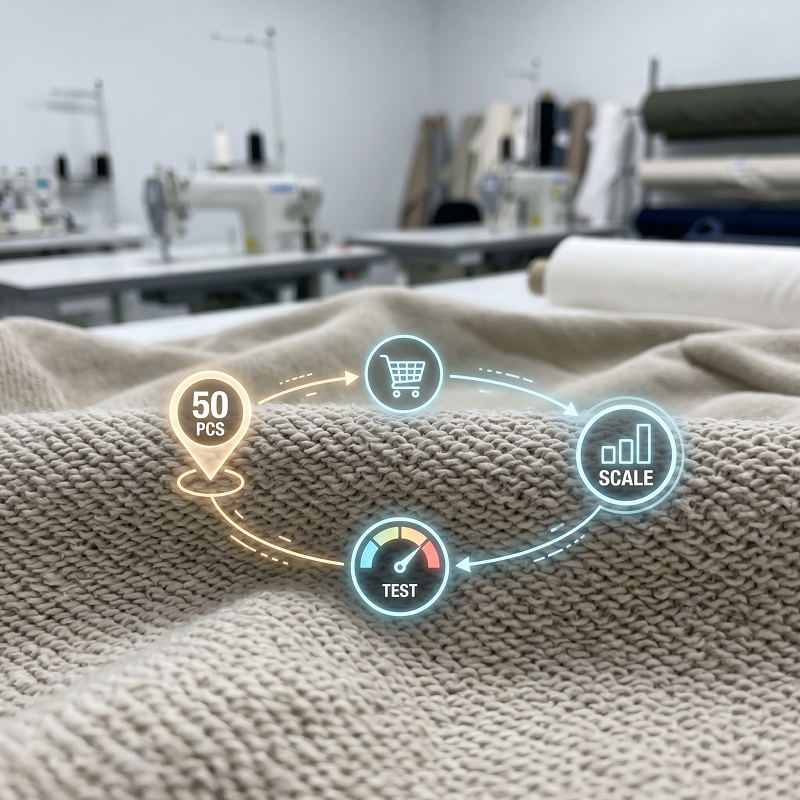
By collaborating with an advanced apparel manufacturer that accommodates flexible low MOQs of 50 to 100 pieces per style and color, brands can deploy a diversified, agile "Capsule Collection" framework. This operational paradigm effectively converts speculative fashion forecasting into data-justified consumer market analytics:
The Initial Capsule Drop: Introduce a highly curated capsule of 50–100 pieces to the market, tracking live digital sell-through rates, add-to-cart conversions, and direct customer feedback through digital communities.
Data-Driven Reorders: If a specific silhouette or colorway archives immediate sell-out status within 72 hours, the brand instantly triggers our expedited manufacturing pipeline for quick-response replenishment, guaranteeing a total turnaround time of just 7 to 15 days. This operational loop mitigates inventory depreciation risks to absolute zero, allowing the brand to preserve precious liquid cash flow for targeted organic marketing and continuous product research and development.
B. Leveraging the Scarcity Economics of Streetwear Culture
The conceptual core of streetwear thrives on perceived scarcity, exclusivity, and immediate social currency. From legendary weekly capsule drops to high-end luxury streetwear collaborative capsules, the industry operates on structural supply-and-demand friction. If a rising independent label manufactures 1,000 identical graphic tees without a deeply anchored consumer community, it incurs significant capital stagnation and dilutes the critical "insider" allure of the garments.
Flexible small-batch apparel production allows brands to structure regular, high-frequency, highly anticipated product drops. Manufacturing controlled volumes of 100 units naturally induces a psychological State of Scarcity (FOMO—Fear of Missing Out) within the consumer community. This intentional inventory restriction amplifies brand desire, allowing labels to maintain premium price points and healthy gross margins without discounting stock.
2. From Vision to Factory Floor: Establishing a Professional Tech Pack
A frequent misstep among emerging apparel visionaries is presenting a manufacturer with simple 3D graphic renders or a collection of casual aesthetic images from Pinterest, expecting a factory to accurately materialize an advanced garment. Within professional industrial manufacturing, this informal approach creates massive alignment gaps and costly structural defects. To enable a high-tier, low-MOQ apparel manufacturer to translate your design into physical reality with mathematical precision, you must engineer a highly technical Tech Pack.
A. Anatomical Blueprint of an Industry-Standard Tech Pack
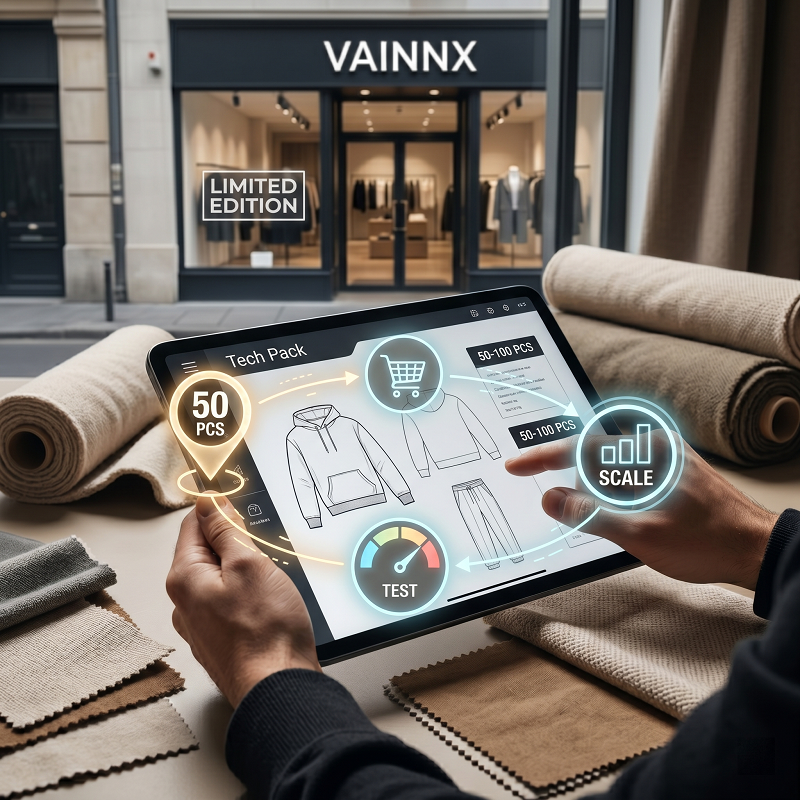
A Tech Pack is the universal, cross-border industrial language of apparel manufacturing. It acts as the legally binding blueprint and quality-assurance contract between the brand and the production facility. A professional-grade streetwear Tech Pack must explicitly contain the following technical schematics:
Technical Flats (Orthographic CADs): Two-dimensional, black-and-white vector illustrations—typically drafted via Adobe Illustrator—displaying the exact front, back, and interior views of the garment. Every design detail, including reinforced topstitching, interior pocket bags, and zipper guard placements, must be visually detailed.
Bill of Materials (BOM): A granular database cataloging every physical component required to manufacture the garment. This includes precise fabric compositions, precise fabric weight (GSM), and highly specific trim demands (such as authentic YKK zipper codes, customized metal eyelets, high-density woven neck branding, specialized satin care labels, and eco-conscious polybag specs).
Size Specifications & Tolerance Matrices: A comprehensive charting of structural measurements across the entire intended size curve (S, M, L, XL, XXL). It must focus heavily on signature streetwear touchpoints: drop-shoulder lengths, chest widths, total center-back garment lengths, and armhole depths. Furthermore, it must establish the strict manufacturing tolerance threshold (typically held to an exact ±1cm to ±1.5cm variance).
Construction and Seaming Callouts: Definitive, engineering-level directions specifying the exact stitch types for every structural seam. Examples include demanding three-needle five-thread flatlock coverstitching on high-stress necklines, double-needle overlock hemming on raw edge cuts, and heavy shoulder-to-shoulder herringbone interior tape reinforcement to preserve structural shape over long-term washing cycles.
Graphic Artwork Positioning and Scale Scales: Exact centimeters indicating the graphic or embroidery location relative to the collar seams, center lines, and side panels. It must also feature a proportional scaling matrix across the entire size run, preventing large graphics from overpowering an extra-small canvas or shrinking into visual insignificance on an double-extra-large garment.
B. The Vainnx Dual-Tier Framework: Ready-Made Efficiency vs. Custom-Made Depth
To accommodate fashion brands navigating diverse growth trajectories and differing product-development capabilities, Vainnx has pioneered an incredibly adaptive Dual-Tier Production System. This program seamlessly delivers both high-speed velocity for immediate collections and unrestricted architectural depth for bespoke high-end streetwear:
The Ready-Made Plan (Syllabus for Speed)
Ideal Alignment: Engineered for emerging digital e-commerce lines, rapid influencer capsules, premium corporate workwear, or fast-monetization drops requiring premium execution under tight timelines.
Structural Advantage: Eliminates the prolonged timelines of baseline pattern engineering. Brands gain immediate access to Vainnx’s proprietary, highly optimized fit silhouette vault—developed from hundreds of historical garment cycles to capture the ideal contemporary regular fit and voluminous oversized high-street drapes.
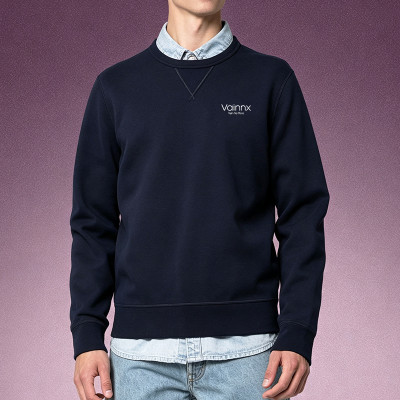
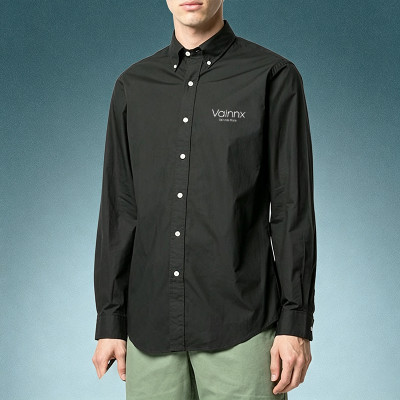
Customization Matrix: Using our ultra-premium, heavy-weight blank garments as a canvas, brands can deploy unrestricted premium surface applications: high-definition embroidery, high-precision screen printing, cutting-edge Direct-to-Garment (DTG) printing, custom woven neck label integrations, bespoke hangtags, and branded eco-packaging. All structured around an approachable entry threshold of 100 units per style and colorway.
The Custom-Made Plan (Syllabus for Total Bespoke Engineering)
Ideal Alignment: Conceived for avant-garde streetwear labels, established independent designers, and luxury avant-garde lines demanding total control over textile architecture, customized dimensions, and highly avant-garde finishes.
Structural Advantage: Complete industrial liberty. Brands can order customized yarn spinning, specify unique fabric blends, engineer signature GSM profiles, and demand custom laboratory lab-dip color matches utilizing exact Pantone codes. Every pattern cut is mapped completely from zero, supporting asymmetric paneling, intricate layered panels, complex utilitarian pockets, and advanced garment-wash treatments. Vainnx proudly maintains a low MOQ of just 100 pieces per style for this complete custom pipeline, removing the high-volume industrial barriers that traditionally suppress high-tier creativity.
3. Fabric Weight and Advanced Textile Alchemy: The Physical Currency of Premium Streetwear
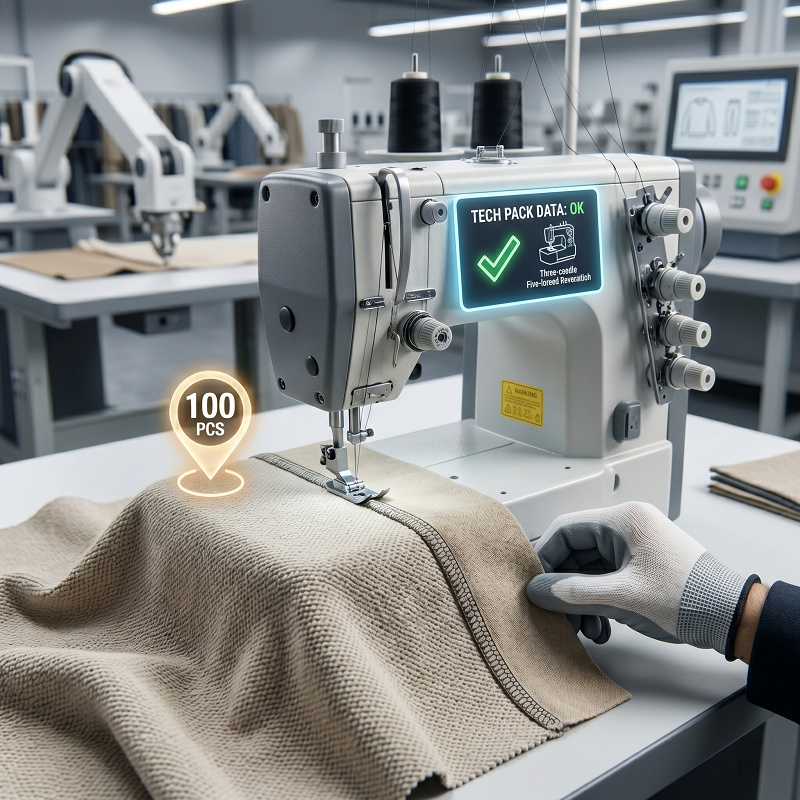
In the cultural ecosystem of streetwear, consumers judge a garment's luxury status not by the graphic application alone, but through immediate physical feedback: the heavy structural drape, the rigid boxy silhouette, and the complex tactile texture of the textile. A professional low-MOQ apparel manufacturer must have the capability to engineer bespoke, heavy-duty fabrics and specialized chemical/physical treatments at a 100-piece scale.
A. The Structural Aesthetics of Heavyweight Cotton
Contemporary streetwear aesthetics are heavily rooted in architectural, structural silhouettes that require significant fabric weight (GSM - Grams per Square Meter).
Premium Streetwear T-Shirts: Standard promotional t-shirts generally measure an uninspiring 140g to 180g, yielding a flimsy silhouette that collapses after minimal washing. A professional high-street tee requires heavy-weight constructions beginning at 240g, 280g, or even an ultra-dense 300g premium combed cotton. Spun from heavy 21-singles or robust 16-singles double-ply compact spinning structures, these fabrics feature a highly uniform surface finish that minimizes pilling. This dense structure easily supports heavy high-density prints or thick multi-layered embroidery without warping or drooping the surrounding jersey fabric.
Heavyweight Hoodies & Sweatshirts: True luxury streetwear hoodies occupy an elevated weight spectrum ranging from 400g, 500g, up to an exceptional 600g ultra-heavyweight industrial fleece. These fabrics are typically engineered using premium long-staple French Terry with deep unbrushed loops or heavily brushed back fleece. Vainnx’s OEKO-TEX® certified combed organic cotton and recycled polyester blends ensure that even at these extreme material weights, the garment maintains structural breathability, a remarkably soft skin-contact feel, and exceptional dimensional stability. This guarantees that the hood effortlessly retains a structural, rigid vertical shape without requiring internal mechanical stiffeners.
B. Decoupling the Chemistry of Premium Garment Washes & Distressed Finishes
True streetwear enthusiasts appreciate the texturing of "natural age and industrial wear." Replicating these vintage, raw, and rugged textures on a newly manufactured garment requires an advanced understanding of physical and chemical wash treatments. When processing small-batch orders of 100 pieces, controlling liquid temperatures, pH parameters, and mechanical friction cycles requires expert precision due to the reduced fabric mass within the washing machinery.
Acid Wash / Marble Wash: This process involves tumbling the completely assembled garment in a dry drum with porous volcanic pumice stones saturated with potassium permanganate. This treatment selectively oxidizes and strips the dye from elevated surface layers, high-stress seams, and shoulder lines, creating a high-contrast, irregular marbled texture rooted in punk and vintage rock-and-roll heritage.
Salt Wash / Sand Wash: This process runs the garment through specialized micro-fine particulate abrasion cycles to gently break down surface fibers. It yields a sophisticated, ultra-soft matte velvet texture across the fabric face, providing an exceptionally supple hand-feel and an understated, faded color tone.
Sun-Fade Effects: This advanced application replicates long-term organic ultraviolet degradation typical of archival garments exposed to natural solar weathering. It requires local hand-application of precise weak-acid or alkaline agents paired with thermal-controlled enzyme bio-washing. The resulting finish delivers smooth, seamless, highly organic tonal gradients on collars, sleeve cuffs, and hemlines.
Artisanal Distressing & Fraying: A manual, artisan-driven structural breakdown. Master craftsmen utilize localized abrasive wheels on pocket borders, hood edges, and wrist cuffs, or engineer un-sewn, raw knife-cut hems. The garment is then processed through high-velocity enzyme washing to naturally unravel structural fibers, delivering an authentic, weathered vintage aesthetic.
4. Engineering Visual Power: Advanced Streetwear Printing and Embroidery Techniques
The graphics and embroidery techniques applied to a garment serve as the visual megaphone for a streetwear brand's counter-culture attitude and subcultural narrative. For agile low-MOQ production runs, understanding how to pair a design with the ideal industrial process is essential for balancing visual depth, economic efficiency, and longevity.
A. Cutting-Edge Adaptations of Industrial Screen Printing
While Direct-to-Garment (DTG) printing remains useful for highly complex, multi-colored photographic layouts, traditional industrial screen printing remains the definitive standard for premium streetwear due to its ink-layer opacity, ink thickness, and diverse texturing possibilities.
3D Puff Printing: This technique infuses specialized micro-spherical blowing agents directly into the plastisol ink base. Following screen application, the garment passes through a high-temperature curing oven. The internal thermal catalyst triggers an immediate volumetric expansion of the ink, causing the graphic to rise vertically from the fabric surface into a crisp, rounded, 3D structure with a soft tactile feel. This application adds significant dimensional texture to minimalist bold typography and brand logos on heavy fleece.
High-Density Silicone Printing: This process utilizes precision-cut micro-thick emulsion screens alongside repeated, layered applications of eco-friendly liquid silicone ink, cured step-by-step. The result is an incredibly sharp, perfectly vertical 3D block ink profile raised 1mm to 2mm off the fabric canvas. The cured surface delivers a smooth finish with high industrial geometry, extreme elastomeric stretching capacity, and complete resistance to checking or peeling.
Crackle Printing: Utilizing an engineered, highly brittle specialty ink formulation, this process allows the graphic surface to split into thousands of micro-fissures upon mechanical stretching or targeted wash cycles. This "distressed aesthetic" exposes the raw cotton fibers beneath the print, serving as an essential technique for capturing a vintage band merchandise look.
Discharge Printing (The Subtractive Masterpiece): Unlike standard topical inks that coat the textile face, discharge printing operates via chemical subtraction. A specialized zinc formaldehyde sulfoxylate (ZFS) reducing paste is screen-printed onto reactive-dyed dark garments (such as deep blacks or navies) to chemically deactivate and extract the base fabric dye, restoring the cotton to its raw, un-dyed cream state. This extracted area is then simultaneously infused with desired color pigments. The ultimate physical advantage is an absolute "zero-hand" feel—the printed zone shares the identical weight, soft touch, and complete breathability of the raw unprinted fabric, aging with a vintage look after repeated washing cycles.
B. Technical Evolution of Industrial Direct-to-Garment (DTG) Printing
For hyper-complex graphic layouts featuring extensive color gradients, intricate illustrative line work, or high-fidelity photographic portraits (Photo Tees), traditional screen printing requires an impractical number of separation films, making it economically unfeasible at a low scale. Here, advanced commercial DTG printing is the ideal alternative.
Vainnx’s manufacturing floor utilizes high-tier, industrial-scale DTG print stations configured with premium imported eco-inks, completely eliminating the stiff, scratchy, and easily cracked finishes associated with standard entry-level DTG setups. Within our system, even when printing on dense 400g deep black brushed fleece, the DTG matrix maintains a gallery-grade resolution, ultra-smooth color transitions, and achieves a certified Grade 4+ color fastness score across 50 standardized commercial laundering cycles.
C. Luxury High-Density Computerized Embroidery
Embroidery instills an undeniable sense of varsity athletic heritage or high-end luxury lifestyle positioning into contemporary streetwear lines.
Tatami Satin Stitching: Employing ultra-high-density, multi-directional structural stitch matrices, this application forms a rigid, lustrous embroidered shield that catches light beautifully, making it perfect for sprawling heraldic motifs, geometric emblems, or bold brand typography.
Chenille / Towel Loop Embroidery: Utilizing an advanced specialized looping needle technique, this process creates thousands of soft, vertical yarn loops standing perpendicular to the fabric face, replicating the dense texture of a vintage towel. This technique channels a distinct classic American varsity jacket look. It is frequently used for oversized collegiate lettering on streetwear bomber jackets and heavy hoodies, establishing a stark, high-contrast material juxtaposition against heavy cotton or premium leather panels.
5. The Architecture of Quality: Vainnx's Strict 6-Stage Quality Control Protocol
An unyielding operational maxim governs professional B2B apparel production: "Low MOQ must never be used as a justification for manufacturing defects." Many unverified, small-scale workshop facilities processing low-volume batches bypass standard pre-production fabric calibration and bulk quality checks. This oversight frequently leads to catastrophic issues for brands upon delivery, including warped necklines, severe dimensional shrinkage, peeling print films, or intense cross-color bleeding—a fatal setback for an emerging independent brand trying to establish marketplace trust.
To ensure that every garment received by our global partners meets the quality standards of international high-street luxury, Vainnx enforces an incredibly rigid, vertically integrated 6-Stage Quality Control Protocol. This quality assurance infrastructure is mapped to line up with international luxury brand standards:
[1. Raw Material Physical Lab Testing] ➔ [2. Pre-Sewing Panel Verification] ➔ [3. In-Line Structural Sewing Audit]
⬇
[6. Final Outbound OQL Box Auditing] ➔ [5. Finishing & Branded Packing Check] ➔ [4. Full Garment Needle Detection]
Stage 1: Raw Material Physical & Chemical Lab Testing
Every incoming fabric roll must pass comprehensive physical and chemical laboratory stress tests before it is released to the cutting department:
Dimensional Shrinkage Calibration: Fabrics undergo 3 standardized commercial laundering and high-heat drying cycles. We strictly limit pure cotton structural shrinkage to an industry-leading ±3% threshold. Any textile roll exceeding this boundary is sent through a full-width industrial mechanical pre-shrunk conditioning chamber before processing.
Spirality / Fabric Twisting Evaluation: This test ensures that circular knit fabrics will not experience torque distortion after washing, preventing garment side-seams from warping diagonally across the consumer's body.
Multi-Factor Color Fastness Assessment: Testing textiles against intense water immersion, rigorous dry/wet crocking friction, and acidic perspiration. This ensures that high-saturation shades (such as hyper-pigmented Klein Blues or deep high-street carbon blacks) retain a certified Grade 4+ lock, preventing color bleeding.
Stage 2: Pre-Sewing Panel & First-Article Verification
Following high-precision automated laser or digital die cutting, specialized quality auditors inspect the very first complete panel assortment against the master engineering CAD drawings. Technicians verify absolute pattern symmetry, confirm that the fabric grain direction aligns perfectly across all panels, and ensure pristine edge cleanliness before sewing. This prevents dimensional pulling or alignment errors during assembly.
Stage 3: In-Line Structural Sewing Audits
Within the sewing department, dedicated Quality Control (QC) supervisors conduct continuous, real-time mobile assembly-line checkouts.
Stitch Density Monitoring: Supervisors mathematically check that stitch frequencies consistently meet the premium luxury benchmark of 11 to 13 stitches per inch (SPI), preventing loose seaming or structural unraveling under high-stress wear.
Technical Integrity Verification: Technicians closely check structural points, such as shoulder-to-shoulder taping alignment and the exact centering of ribbed collar inserts. If a single stitch omission, needle deflection, or seam pucker is discovered, the affected article is immediately rejected, pulled from the line, and stripped down for re-sewing, preventing it from advancing to subsequent assembly phases.
Stage 4: Full-Garment Finishing & Needle Detection Protocols
Upon completing assembly, all garments enter a meticulously managed clearing zone.
Manual Thread Extraction: Specialized trimming teams manually inspect every garment inside and out, removing all residual thread tails to ensure a pristine interior hand-feel.
Industrial High-Sensitivity Needle Detection Channeling: To guarantee absolute end-consumer physical safety, 100% of manufactured apparel must pass through a high-sensitivity conveyor-type metal detection tunnel. This step identifies and isolates any micro-ferrous fragments (such as fractured sewing needle points or industrial metallic dust) that could have become embedded within heavy fleece or hidden double-layered seams, eliminating legal and safety liabilities for the brand.
Stage 5: Finishing, Steaming, & Branded Packaging Checks
Garments move through high-capacity industrial steam stations to restore the cotton’s natural loft, smooth hand-feel, and uniform surface tension. Afterward, inspectors place each piece under full-spectrum, high-intensity QA lights for a comprehensive 360-degree aesthetic review:
Trim & Branding Calibration: Checking the exact positioning accuracy of woven main labels, satin care guidelines, and exterior custom brand patches. Zippers are tested multiple times to guarantee smooth operation.
Hangtag and Polybag Alignment: Ensuring that customized brand tags are pinned to the correct seams and that all regional barcode/SKU stickers match perfectly. Finally, garments are neatly folded and sealed within Vainnx's high-gauge, compostable branded zipper bags, protecting the product against moisture, dust, and friction during transit.
Stage 6: Final Outbound Quality Control (OQC) Auditing
Before master shipping cartons are taped shut and released to global freight forwarders, our Quality Director leads an independent, blind statistical audit based on the globally recognized AQL 2.5 / 4.0 Standard (Acceptable Quality Limit). If the randomly sampled boxes expose any metric variations or packaging non-conformities that cross the failure threshold, the entire production lot is held back. The batch is then routed through a 100% full-tally manual re-inspection, ensuring that no substandard garments ever leave the factory floor.
6. The Brand Scaling Roadmap: Transitioning Seamlessly from 100 to 10,000 Units
While a low-MOQ structure offers the ultimate launchpad for a young brand, the long-term goal remains scaling your enterprise into a large-scale commercial operation. During this transition, upgrading your manufacturing supply chain can be a complex and risky phase. Many clothing labels operate smoothly when producing 100 units, but face significant issues when orders climb to 5,000 units. Partnering with a factory that lacks industrial infrastructure often results in severe production delays, broken supply chains, and a steep drop in quality control.
Partnering with Vainnx—a fully vertical, high-capacity industrial manufacturer—allows your streetwear brand to navigate this scaling process smoothly through an integrated, step-by-step production framework:
A. Seamless Step-by-Step Supply Chain Transition
Vainnx operates on a Dual-Engine Production Architecture. We run highly responsive, agile small-batch production lines (configured for rapid 3-day sample iterations and 50–100 unit micro-batching) right alongside our massive, fully automated smart manufacturing facility. This commercial hub utilizes advanced hanging line systems engineered to output hundreds of thousands of premium garments monthly.
Consequently, when an agile capsule drop on your independent e-commerce store goes viral, causing your order demands to scale from 100 pieces to 500, 5,000, or 10,000 units, you never face the logistical nightmare of sourcing a new factory. Our ERP system seamlessly migrates your verified Tech Packs, exact pattern files, custom stitching metrics, and custom textile formulations directly into our mass-production facility. This transition delivers a substantial reduction in per-unit manufacturing costs (economies of scale) while maintaining the exact luxury craftsmanship, fabric weights, and strict quality control of your initial small runs, significantly boosting your brand's gross margins.
B. Empowering Your Brand with High-Tier Visual Content Assets
The operational heartbeat of a successful international direct-to-consumer store relies heavily on high-impact visual content marketing. Elite-tier seasonal lookbooks, ultra-crisp studio product photography, and high-definition dynamic video assets showing the true drape and movement of a garment are the primary drivers of digital Conversion Rates (CR). For scaling independent brands, sourcing international models, hiring high-fashion photographers, and renting minimalist industrial venues can present huge financial hurdles.
As a comprehensive manufacturing partner, Vainnx offers an elite Visual Content Asset Support System for our long-term brand clients. Situated within China's premier clothing manufacturing and creative media hubs (Dongguan and Guangzhou, Guangdong), we maintain direct access to an international model network (featuring professional Western models specializing in high-street, skate-culture, and luxury aesthetics), elite fashion media production teams, and dedicated brutalist concrete studio locations.
As your bulk production order nears completion, our team can simultaneously shoot and deliver high-definition e-commerce lookbooks, cinematic product video assets, and raw behind-the-scenes manufacturing footage showing the artisan craftsmanship behind your clothing. This content is highly optimized for viral organic reach on TikTok, Instagram Reels, and YouTube Shorts. By bridging the gap between physical manufacturing and digital content execution, Vainnx empowers your brand to present a highly professional, authoritative image to the global market, allowing you to scale your clothing line efficiently from its very first drop.
📞 Phone: [86-15015158179]
📧 Email: [info@vainnx.com]
🌐 WhatsApp:[https://wa.me/8618025298509]
Click the link above to start designing your custom streetwear today. We can’t wait to help you express your bold style!