How to Choose the Right Fabric for Streetwear Clothing: A Complete Manufacturer's Guide
Introduction: Why Does Fabric Selection Matter in Streetwear Manufacturing?
In today's competitive global streetwear market, successful clothing products require more than attractive designs, distinctive silhouettes, and recognizable branding. The fabric behind each garment plays an equally important role in determining its appearance, comfort, durability, and overall market value.
Whether you are developing an oversized T-shirt, a heavyweight hoodie, vintage-washed pants, or a technical streetwear jacket, choosing the right fabric is essential to achieving the desired result. Even fabrics with the same weight can have completely different textures, drape, warmth, flexibility, and washing performance.
For emerging streetwear brands, choosing unsuitable materials can lead to disappointing samples, unexpected production costs, inconsistent quality, and unnecessary delays. For established fashion labels, fabric selection is equally important for maintaining product consistency, developing new collections, and building a reliable supply chain.
As a professional streetwear clothing manufacturer, VAINNX understands that fabric selection is closely connected to every stage of garment production. We evaluate not only fiber composition and GSM but also garment construction, pattern requirements, printing techniques, embroidery, washing processes, and final quality expectations.
In this comprehensive guide, we will explore the most popular streetwear fabrics, fabric weights, fiber compositions, textile structures, garment-specific material recommendations, finishing techniques, and manufacturing quality control. Whether you are starting a clothing brand or expanding an existing collection, this guide will help you make more informed fabric decisions.
1. Why Is Fabric Selection So Important in Streetwear Manufacturing?
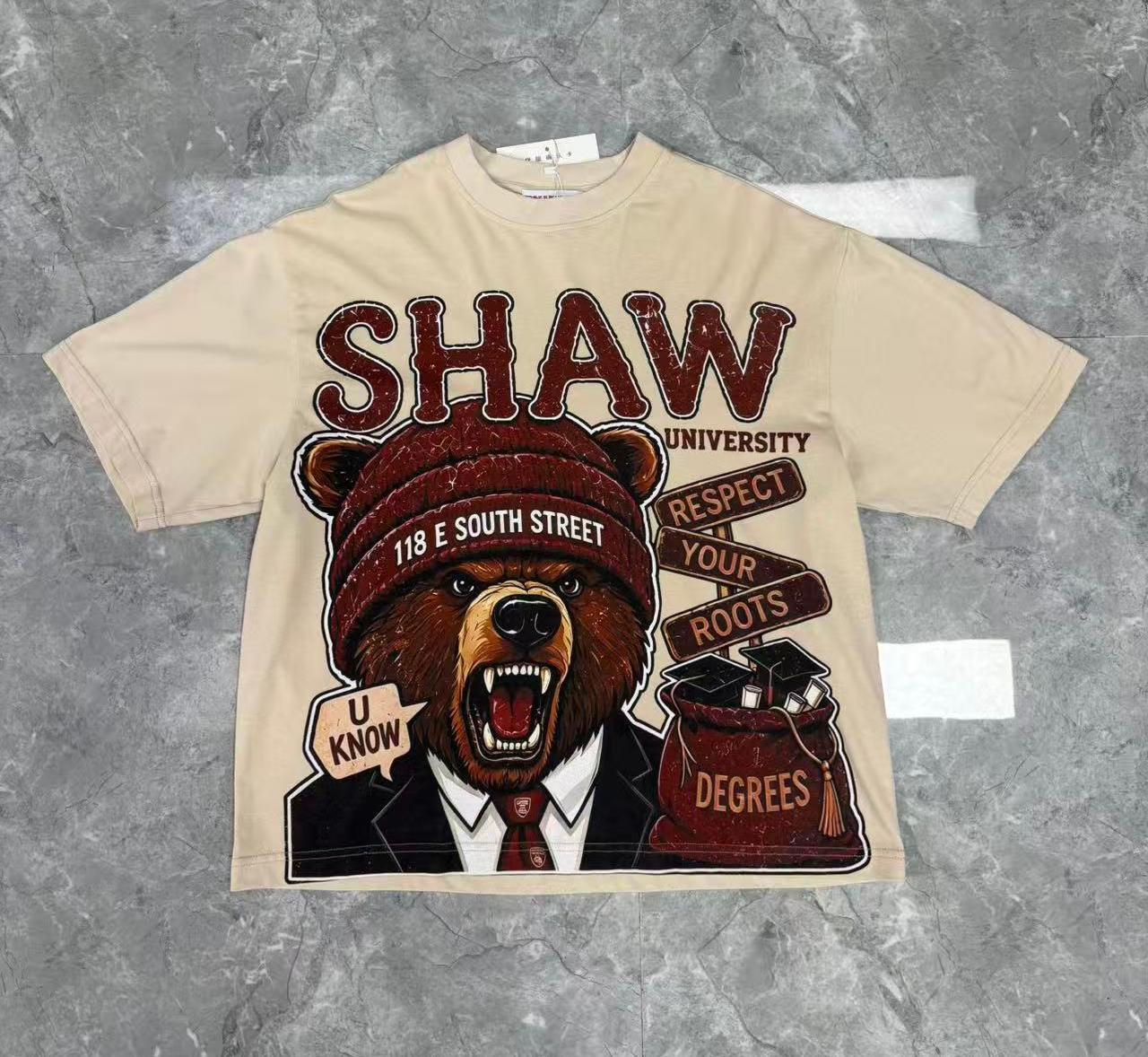
Fabric is the foundation of every garment. It influences almost every stage of clothing development, from initial design and pattern making to sampling, bulk production, and final delivery.
For streetwear brands, fabric must do more than provide basic comfort. It should support the brand's visual identity, product positioning, and intended wearing experience.
1.1 Fabric Determines the Overall Appearance and Silhouette
Different fabrics have different levels of structure, flexibility, thickness, and drape. These characteristics directly influence how a garment looks when worn.
For example, an oversized T-shirt made from lightweight and overly flexible jersey may struggle to maintain its intended wide-shoulder silhouette. Even if the measurements are correct, the garment may appear too flat, lose its boxy shape, or hang differently from the original design.
On the other hand, fabric that is excessively stiff or heavy may make the same T-shirt uncomfortable and restrict natural movement.
This is why experienced clothing manufacturers evaluate fabric and pattern construction together. Fiber composition, fabric density, stretch, and finishing must all be considered when developing the final garment.
1.2 Fabric Influences Comfort and Wearing Experience
Consumers purchase streetwear because of its appearance, but comfort plays a major role in whether they continue wearing and recommending a product.
T-shirts generally require comfortable hand feel and suitable breathability. Hoodies need a balance of warmth, softness, and weight. Streetwear pants may require flexibility, abrasion resistance, and sufficient freedom of movement.
Unsuitable fabric can make a garment feel uncomfortable, overly stiff, too warm, or prone to pilling.
For this reason, brands should consider the intended season, target customers, and actual wearing environment before selecting materials.
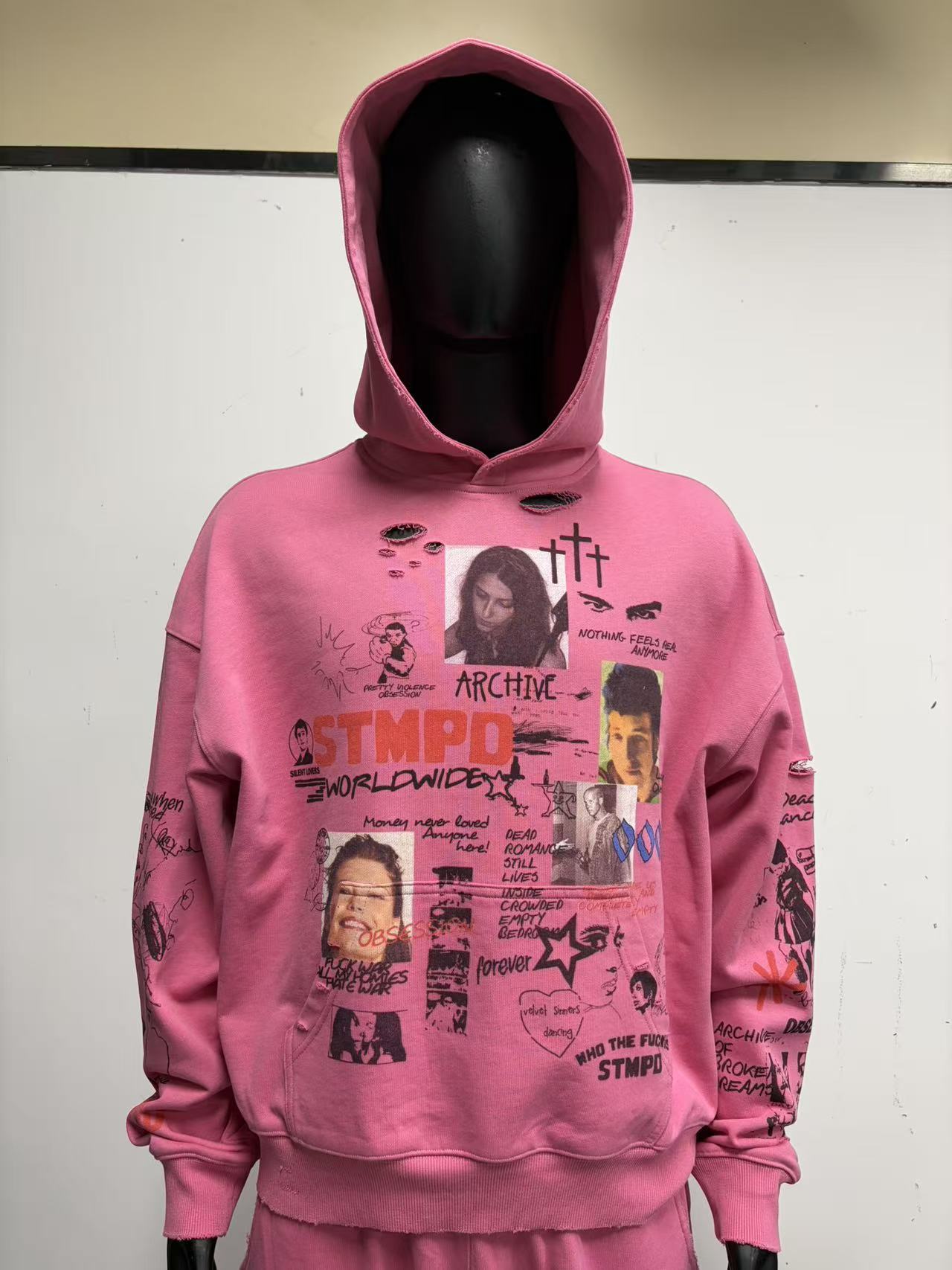
1.3 Fabric Affects Printing, Embroidery, and Washing Results
Streetwear garments often feature distinctive decorative techniques, including:
Screen printing
DTG printing
Puff printing
Embroidery
Flocking
Vintage washing
Distressing
Acid washing
Not every fabric performs equally well with these techniques.
For example, a smooth cotton jersey surface may be suitable for detailed graphics, while a highly textured or elastic material may require adjustments to the printing process.
Embroidery also requires sufficient fabric stability. Lightweight or highly stretchable materials may experience puckering or distortion around embroidered areas.
If a garment requires washing, bleaching, or distressing, the manufacturer should test the interaction between the fabric and finishing process before bulk production.
An experienced streetwear clothing manufacturer understands that the best way to prevent these problems is to develop and approve a complete sample using the intended materials and manufacturing techniques.
1.4 Fabric Quality Influences Durability and Brand Reputation
Clothing is exposed to repeated washing, friction, stretching, and daily wear. Therefore, fabric stability is essential.
Quality materials should maintain acceptable dimensions, color, surface appearance, and garment structure throughout their intended use.
Fabric that shrinks excessively, fades easily, loses its shape, or develops visible pilling can damage the consumer's impression of a brand.
For long-term brand development, consistent product quality is often more valuable than simply choosing the most expensive fabric.
2. Common Types of Fabrics Used in Streetwear Clothing
Before selecting materials, brands should understand the basic characteristics and applications of different textile categories.
As a professional streetwear manufacturer, VAINNX evaluates knitted fabrics, woven fabrics, and blended materials according to garment type, design direction, and production requirements.
2.1 100% Cotton
Cotton is one of the most widely used materials in streetwear manufacturing, particularly for T-shirts, sweatshirts, and selected hoodie styles.
Cotton fabrics are popular because of their familiar soft hand feel, moisture absorption, and everyday wearing comfort. They also support various dyeing and decoration techniques.
Main advantages:
Soft and comfortable against the skin.
Good moisture absorption.
Suitable for many printing and dyeing processes.
Available in different weights and fabric constructions.
Suitable for minimalist, vintage, and casual streetwear styles.
Common applications:
Oversized T-shirts
Graphic T-shirts
Casual hoodies
Sweatshirts
Everyday streetwear basics
However, 100% cotton does not automatically guarantee the same performance across different products. Yarn quality, fabric density, construction, and finishing all influence the final result.
For example, a vintage-washed cotton T-shirt may have a softer appearance and faded color compared with an untreated garment.
During manufacturing, brands and clothing manufacturers should also evaluate shrinkage, colorfastness, and consistency between fabric batches.
2.2 Heavyweight Cotton
Heavyweight cotton is frequently considered by streetwear brands developing oversized T-shirts and structured silhouettes.
Compared with lightweight cotton jersey, heavyweight cotton generally provides more body and support, helping garments maintain a more defined shape.
Main advantages:
Supports structured oversized silhouettes.
Creates a substantial visual appearance.
Suitable for many graphic printing applications.
Helps achieve distinctive streetwear proportions.
However, heavier fabric is not always better.
If the material is excessively heavy and the garment pattern has not been adjusted accordingly, the final product may feel stiff, bulky, or uncomfortable.
When selecting heavyweight cotton, brands should consider GSM, yarn structure, fabric density, hand feel, and the intended silhouette.
2.3 French Terry
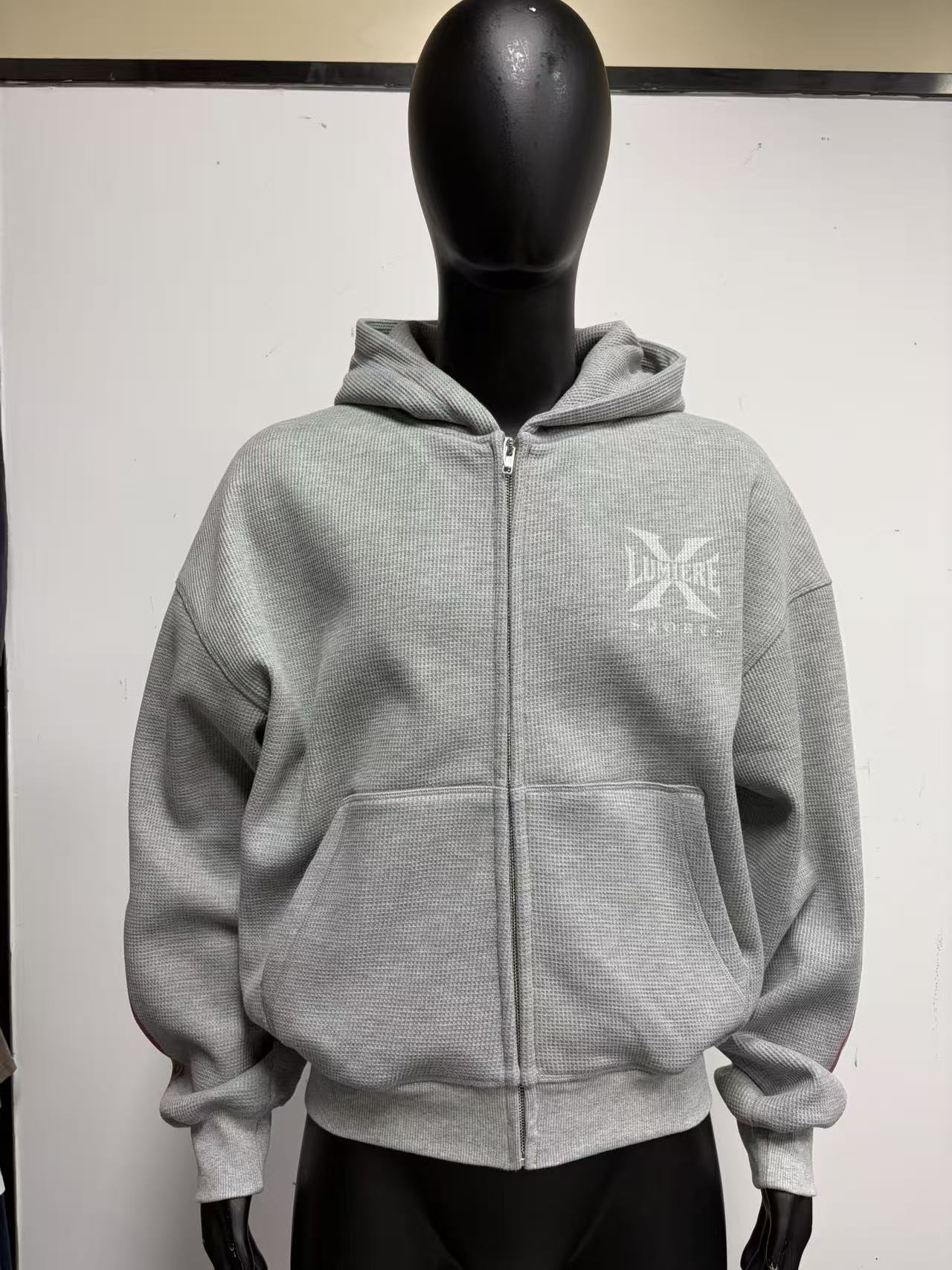
French terry is a popular knitted fabric used for hoodies, sweatshirts, and jogger pants.
It typically features a smooth outer surface and looped construction on the reverse side. Unlike brushed fleece, its interior generally retains the loop structure rather than being heavily brushed.
Main advantages:
Comfortable hand feel.
Soft loopback interior.
Suitable for spring and autumn collections.
Can provide natural drape.
Works well for casual and athletic streetwear.
The exact performance of French terry depends on yarn, fabric density, and finishing. Therefore, brands should examine both sides of the actual material.
For a hoodie that requires natural movement without a heavily brushed interior, French terry is an excellent material category to compare.
2.4 Brushed Fleece
Brushed fleece is commonly used for autumn and winter hoodies and sweatshirts.
The fabric undergoes a brushing process that raises fibers on its inner surface, creating a softer texture and improved warmth.
Main advantages:
Soft interior surface.
Comfortable warmth.
Suitable for colder seasons.
Works well with relaxed and oversized silhouettes.
Brushed fleece is available in different constructions and weights. Lightweight and heavyweight options may differ significantly in bulk, surface texture, warmth, and washing performance.
When selecting brushed fleece, brands should evaluate pilling, fiber shedding, stretch recovery, and surface appearance after laundering.
2.5 Polyester Blends
Polyester blends combine polyester with cotton or other fibers to achieve different fabric characteristics.
The final properties depend on the fiber ratio, yarn structure, knitting or weaving method, and finishing process.
Main characteristics:
Different compositions can create different hand feels.
Suitable for selected sportswear and functional garments.
Available in various surface textures.
Can be adjusted according to product requirements and target cost.
Some streetwear tracksuits use cotton-polyester blends to balance appearance, movement, and everyday maintenance.
However, blended fabrics are not automatically more breathable or durable than cotton. Their actual performance should be evaluated through material samples and finished garment testing.
2.6 Nylon
Nylon is commonly used for streetwear jackets, windbreakers, and utility-inspired clothing.
It can create lightweight, technical, and sporty appearances, making it suitable for garments featuring multiple pockets, panel construction, and functional details.
Main advantages:
Suitable for lightweight outerwear.
Available in different surface finishes.
Works for selected wind-resistant designs.
Can be combined with mesh, lining, and other materials.
When developing a nylon jacket, the shell fabric should never be evaluated in isolation. Lining, zippers, coatings, trims, and construction all influence the final garment's weight, drape, and wearing experience.
2.7 Denim
Denim is an important fabric category for streetwear and vintage-inspired collections.
It is widely used for jeans, denim jackets, cargo pants, and workwear-inspired garments.
Different washing, fading, abrasion, and dyeing techniques can create distinctive vintage appearances.
Main advantages:
Recognizable textile texture.
Suitable for vintage and workwear aesthetics.
Compatible with many washing and distressing effects.
Helps create visually distinctive brand collections.
When selecting denim, manufacturers should consider fabric weight, construction, color stability, and dimensional changes after washing.
2.8 Cotton Twill and Canvas
Cotton twill and canvas are frequently used for cargo pants, workwear jackets, and overshirts.
These fabrics can provide more defined structures and are suitable for utility-inspired and vintage streetwear designs.
Important evaluation points include stiffness, abrasion performance, sewing requirements, and the intended finishing process.
2.9 Rib Fabric
Rib fabric is commonly used for hoodie cuffs, waistbands, T-shirt collars, and garment panels.
Its knitted structure provides stretch and helps garment edges maintain a comfortable fit.
When choosing rib fabric, brands should consider its color, thickness, stretch, and recovery in relation to the main garment fabric.
Ribbing that is too tight may feel uncomfortable, while insufficient recovery can cause collars and cuffs to become loose over time.
3. What Is GSM and How Should You Choose the Right Fabric Weight?
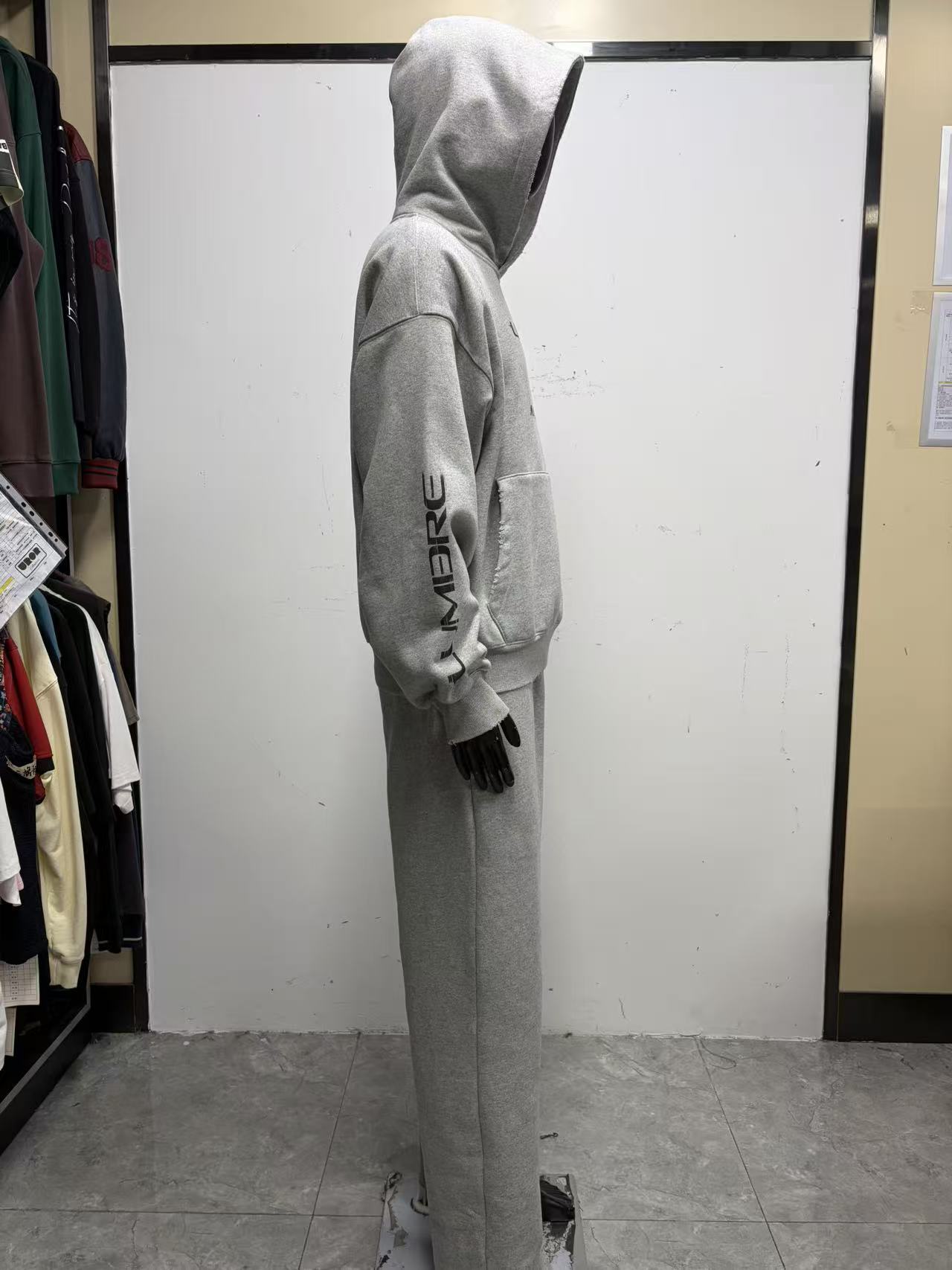
GSM stands for Grams per Square Meter. It measures the weight of one square meter of fabric.
In clothing manufacturing, GSM is an important measurement used to compare fabric weights. Many streetwear brands include GSM requirements when developing new products.
However, GSM alone does not determine fabric thickness, softness, warmth, or quality.
Two fabrics with identical GSM values may perform very differently because of differences in fiber composition, yarn structure, construction, and finishing.
3.1 Common GSM Reference Ranges for Streetwear
The following ranges can serve as starting points during product development. They are not universal manufacturing standards.
| Product Type | Typical Reference GSM |
| Lightweight T-shirt | 140–180 GSM |
| Regular T-shirt | 180–220 GSM |
| Heavyweight T-shirt | 220–280 GS |
Extra heavyweight T-shirt | 280–350 GSM |
Lightweight sweatshirt | 240–300 GSM |
Medium-weight hoodie | 300–360 GSM |
Heavyweight hoodie | 360–450 GSM |
Heavy fleece hoodie | 400–500+ GSM |
The actual fabric weight should be selected according to fiber composition, construction, season, silhouette, and desired wearing experience.
3.2 Lightweight Fabrics: When Should You Use Them?
Lightweight fabrics generally provide a lighter wearing experience and may offer more natural movement and drape.
They are suitable for summer T-shirts, basic garments, and selected lightweight streetwear products.
For graphic T-shirts intended for warm weather, brands can begin by comparing lightweight and medium-weight cotton jerseys.
However, if the design requires broad shoulders and a defined boxy silhouette, the fabric must still provide sufficient structural support.
3.3 Medium-Weight Fabrics for Everyday Collections
Medium-weight fabrics provide flexibility when balancing comfort, structure, and everyday usability.
They are suitable for regular T-shirts, lightweight sweatshirts, and selected sportswear products.
For brands developing permanent core collections, medium-weight materials are often worth considering because they can support a wide range of styling directions.
3.4 Heavyweight Fabrics for Structured Streetwear
Heavyweight materials are frequently selected for garments that emphasize substantial texture and distinctive silhouettes.
Common applications include:
Oversized heavyweight T-shirts
Boxy-fit hoodies
Heavyweight sweatshirts
Structured streetwear pants
Heavier fabrics can provide more body and visual volume, but they also increase garment weight and may require adjustments to pattern construction.
A production sample should always be reviewed before confirming a heavyweight material for bulk manufacturing.
3.5 Why Should You Never Judge Fabric Quality by GSM Alone?
This is one of the most common misunderstandings among emerging clothing brands.
GSM measures fabric weight per unit area, but it cannot independently determine:
Whether the fabric feels soft.
Whether it is breathable.
Whether it is resistant to pilling.
Whether it will shrink after washing.
Whether it is suitable for printing.
Whether it has good stretch recovery.
A professional clothing manufacturer evaluates GSM together with fiber composition, yarn characteristics, fabric construction, finishing, and garment testing.
4. How to Match Different Fabrics with Streetwear Garments
The most effective approach to fabric selection is to identify the garment first and then compare suitable materials.
Instead of purchasing one type of fabric and trying to use it across an entire collection, brands should consider the different requirements of each product.
4.1 T-Shirts: Choosing the Right Fabric for Streetwear T-Shirts
T-shirts are among the most important products for many streetwear brands. They also offer considerable opportunities for developing distinctive brand identities through different materials, fits, and decorative techniques.
When selecting T-shirt fabrics, consider the following factors.
First: Fabric weight.
Different weights create different wearing experiences. Lightweight cotton jersey is suitable for everyday basics, while heavyweight cotton may be more appropriate for structured oversized T-shirts.
Second: Surface texture.
For garments featuring detailed graphics, evaluate whether the surface can support the intended printing result.
Third: Fit and silhouette.
Oversized T-shirts require careful consideration of shoulder width, sleeve length, body width, and hem proportions.
Fourth: Washing stability.
During sampling, evaluate shrinkage, twisting, and color changes to reduce the risk of size inconsistencies in bulk production.
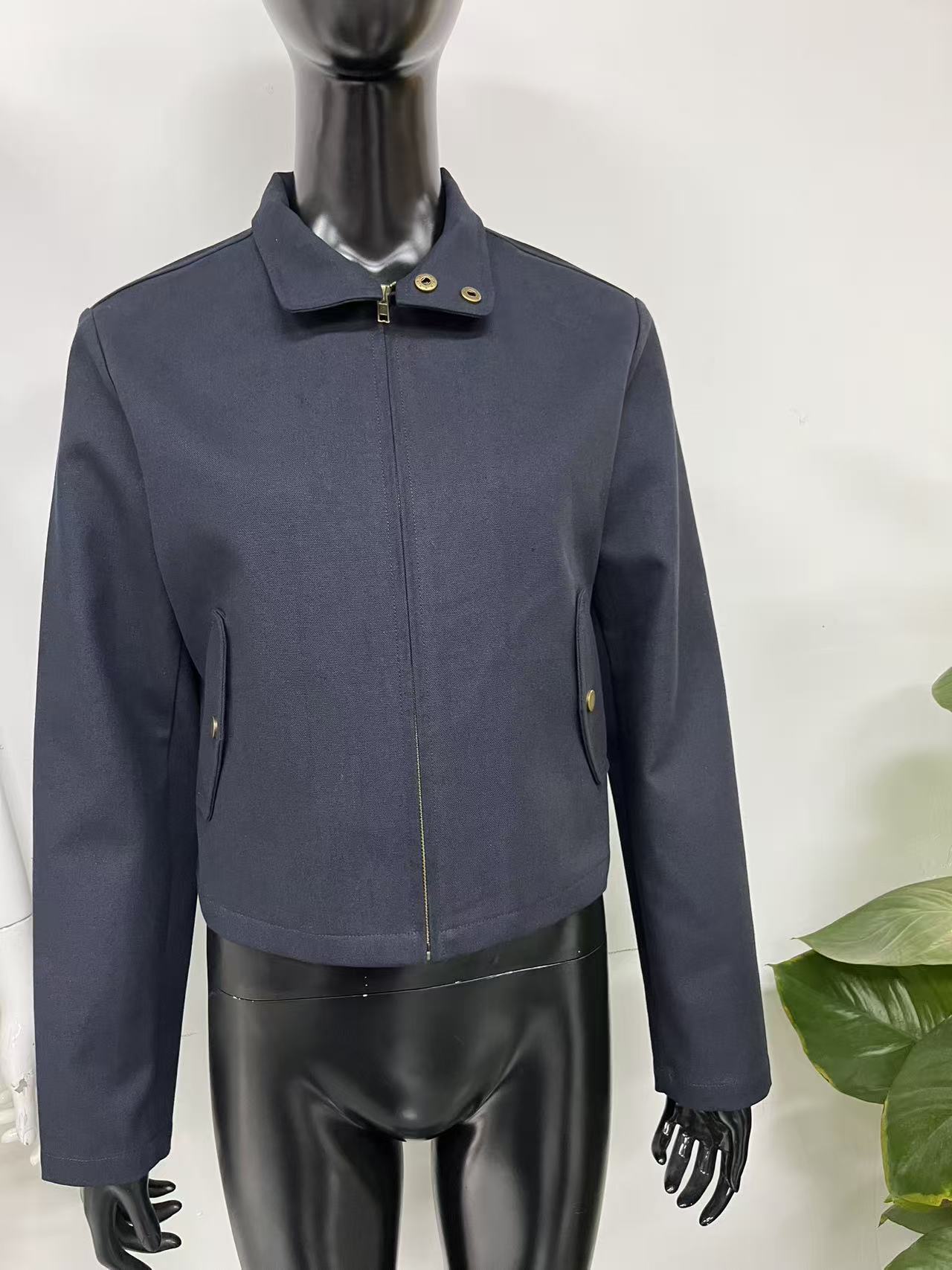
4.2 Hoodies: Selecting the Right Fabric for Custom Hoodies
Hoodies are a major product category in the streetwear market.
Different brands have different expectations. Some prefer soft and lightweight hoodies for everyday wear, while others want heavyweight materials that create oversized, substantial, and structured silhouettes.
Common fabric options include:
French terry
Brushed fleece
Heavyweight cotton blends
Cotton-polyester blends
Beyond GSM, hoodie development requires attention to hood construction, ribbed cuffs, waistbands, kangaroo pockets, and overall proportions.
For example, a heavyweight hoodie may require a more structured hood to maintain the intended shape.
For hoodies featuring printing, embroidery, or vintage washing, a complete production-representative sample should be developed before bulk approval.
4.3 Sweatpants: Fabric Selection for Comfortable Streetwear Pants
Sweatpants require a balance of softness, flexibility, abrasion resistance, and comfort.
French terry and brushed fleece are common materials worth considering.
For loose-fit sweatpants, manufacturers should evaluate how the fabric drapes along the legs. For cuffed designs, waistband and ankle-rib proportions should also be considered.
It is equally important to check whether the knees become excessively stretched and whether the waist and inseam measurements remain stable after washing.
4.4 Cargo Pants: Choosing Fabrics for Utility-Inspired Designs
Cargo pants often feature multiple pockets, panel construction, and decorative details.
The selected fabric must support the garment structure while remaining comfortable during movement.
Common options include cotton twill, canvas, denim, and selected functional blends.
During development, manufacturers should pay attention to pocket reinforcement, seam strength, leg movement, and the final washing effect.
4.5 Jackets: Selecting Fabrics for Streetwear Outerwear
Jacket development is more complicated than standard T-shirt production.
Depending on the style, a jacket may include an outer shell, lining, filling, ribbing, zippers, and multiple accessories.
For example:
Bomber jackets: Nylon, polyester woven fabrics, and rib trims.
Denim jackets: Different weights of denim.
Workwear jackets: Cotton twill and canvas.
Lightweight windbreakers: Nylon and polyester woven shells.
All components should be evaluated together because the final appearance and performance depend on the complete construction.
4.6 Tracksuits: Choosing Fabrics for Coordinated Sets
Tracksuits require careful coordination between the upper and lower garments.
Both pieces should have compatible colors, textures, drape, and wearing characteristics.
Depending on the intended product positioning, brands can consider cotton-polyester blends, French terry, functional knitted materials, and other sportswear fabrics.
Color consistency between the top and pants is particularly important when developing coordinated sets.
5. How Does Fiber Composition Affect Fabric Performance?
Fabric weight and construction are important, but fiber composition is another major factor influencing the final garment.
5.1 Cotton
Cotton is one of the most widely used natural fibers in streetwear clothing.
It is commonly selected for T-shirts, sweatshirts, and casual apparel.
Cotton fabrics provide a familiar hand feel and can achieve different appearances through variations in construction and finishing.
During manufacturing, brands should pay attention to shrinkage, colorfastness, and consistency between material batches.
5.2 Polyester
Polyester is a synthetic fiber frequently used in sportswear, functional garments, and blended textiles.
Its performance depends on fiber form, yarn construction, and fabric structure.
In streetwear development, polyester can be combined with cotton to achieve different combinations of structure, hand feel, and maintenance requirements.
5.3 Elastane / Spandex
Elastane is commonly used in fabrics that require stretch.
It helps materials extend and recover, supporting freedom of movement.
It can be useful for selected sportswear pants, fitted garments, and stretch-blended products.
When using elastane-containing fabrics, manufacturers should also evaluate recovery performance and dimensional stability after dyeing, heat treatment, and washing.
5.4 Cotton-Polyester Blends
Cotton-polyester blends are widely used across the clothing industry.
Different fiber ratios can create different hand feels, appearances, and manufacturing characteristics.
However, no single blend ratio is ideal for every product. The correct composition should be determined through actual samples and production requirements.
5.5 Recycled Fibers
As sustainability becomes increasingly relevant to fashion brands, recycled fibers are another material direction worth considering.
For example, selected recycled polyester materials can be used for sportswear and functional streetwear.
Brands interested in environmentally responsible materials should confirm the actual fiber source, material specifications, and available certification documents with their clothing manufacturer.
A material name alone is not sufficient evidence of environmental performance.
6. How Do Fabric Finishing Techniques Change the Final Appearance of Streetwear?
Fabric does not always enter garment production in its original condition.
Many streetwear products require additional processes such as dyeing, washing, brushing, abrasion, coating, or other finishing techniques to achieve their intended appearance.
6.1 Vintage Washing
Vintage washing changes the garment's surface appearance and color, creating a softer and more aged visual effect.
It is frequently used for streetwear hoodies, T-shirts, and pants.
Different materials may respond differently to washing. Therefore, brands should approve the target color, surface appearance, and dimensional changes before bulk production.
6.2 Acid Washing
Acid washing is used to create distinctive irregular fading and contrasting surface effects.
It is suitable for selected vintage-inspired and streetwear designs.
However, the process must be evaluated according to fabric composition, dyeing methods, and the actual manufacturing procedure.
The same processing parameters should not automatically be applied to every material.
6.3 Distressing
Distressing creates worn-in effects through localized abrasion, holes, tearing, and other treatments.
It can be applied to T-shirts, hoodies, denim, and pants.
During manufacturing, the placement, dimensions, and appearance of distressed areas must match the approved design without compromising important structural or stress-bearing areas.
6.4 Brushing
Brushing changes the surface texture of a fabric and can create a softer interior.
This technique is particularly relevant to autumn and winter sweatshirts and hoodies.
After brushing, manufacturers should inspect fiber shedding, pilling, and washing performance.
6.5 Coating
Coating changes selected surface and functional characteristics of fabrics.
Some technical streetwear jackets use special coatings to achieve specific visual or functional requirements.
However, coatings may also influence breathability, flexibility, softness, and care requirements. Therefore, the complete garment should be evaluated before production.
6.6 Why Should Finishing Requirements Be Confirmed Early?
A common production mistake occurs when customers approve an untreated fabric and only later decide to introduce washing, printing, or additional finishing.
This can result in noticeable differences between the original sample and the finished garment.
A professional clothing manufacturer should establish the intended production sequence during product development and create samples that follow the planned manufacturing process as closely as possible.
7. How to Match Fabric with Printing and Embroidery
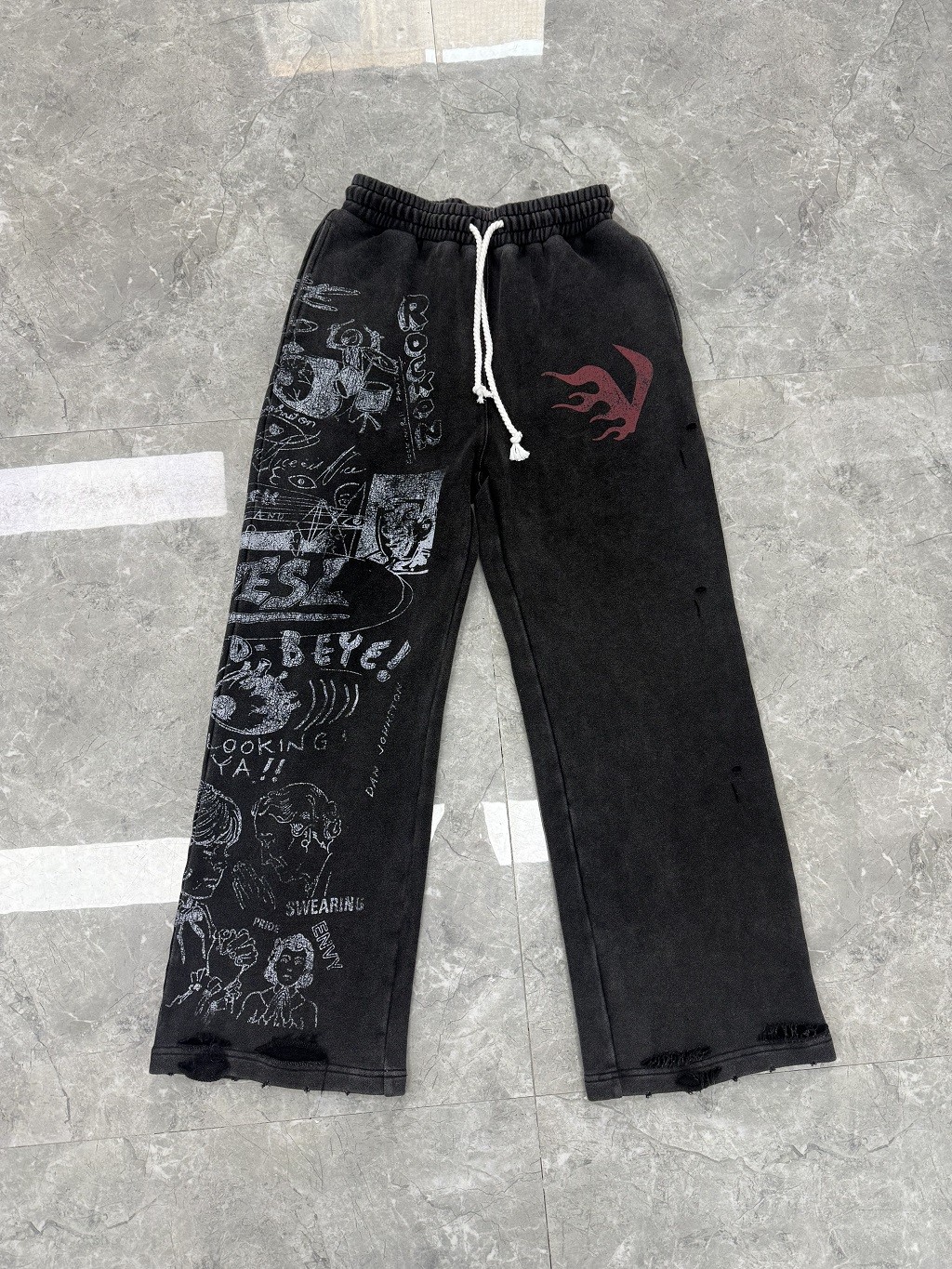
Streetwear garments often rely on strong visual expression. Printing and embroidery are therefore important techniques for developing recognizable brand products.
However, different fabrics have different levels of compatibility with decorative processes.
7.1 Screen Printing
Screen printing is suitable for many cotton T-shirts, sweatshirts, and hoodies.
It can create different graphic effects according to the artwork and production requirements.
When selecting fabric, manufacturers should evaluate surface smoothness, color, ink adhesion, and the final hand feel.
7.2 Puff Printing
Puff printing creates raised graphic effects that add dimension to garment surfaces.
It is frequently used for streetwear logos, typography, and decorative graphics.
The final result depends on printing materials, processing parameters, and the underlying fabric.
Brands should approve samples to confirm the height, edges, and overall appearance of the raised design.
7.3 DTG Printing
Direct-to-garment printing is suitable for selected complex and multicolor graphics.
During production, manufacturers should evaluate print clarity and final appearance according to fabric composition, color, and surface structure.
7.4 Embroidery
Embroidery adds texture and brand recognition to clothing.
However, embroidery design must account for fabric thickness, stability, and stretch.
For lightweight materials, manufacturers should evaluate backing materials and stitch density to reduce puckering and distortion.
7.5 The Correct Sequence for Printing and Washing
If a garment requires both printing and washing, brands must confirm the order of these processes in advance.
Different processing sequences may create different colors and surface effects.
Therefore, printing should not be approved only on untreated fabric. The test should use the actual production material and intended finishing sequence.
8. How Can You Evaluate Fabric Quality?
Fabric quality is not determined by one measurement. It depends on fiber, yarn, textile construction, dyeing, finishing, and manufacturing conditions.
For a professional clothing manufacturer, fabric inspection should be an essential part of production quality control.
8.1 Fabric Shrinkage
Shrinkage is one of the most important considerations in garment production.
Cotton materials, in particular, may experience dimensional changes after dyeing, washing, and other wet-processing procedures.
Brands should evaluate the material and finished garment according to the intended care instructions.
8.2 Colorfastness
Colorfastness describes how well a material retains its color during washing, rubbing, and normal use.
Different colors, dyeing processes, and fiber compositions may produce different results.
Dark washed pants and garments featuring large printed graphics deserve particular attention to color stability.
8.3 Pilling Performance
Pilling can negatively affect garment appearance and wearing experience.
It is influenced by fiber characteristics, yarn structure, fabric construction, finishing, and actual usage.
Materials such as brushed fleece should be inspected for surface fuzzing and pilling.
8.4 Stretch and Recovery
Stretch fabrics should be evaluated for recovery after extension.
If recovery is insufficient, garments may become distorted after repeated wear.
8.5 Batch Consistency
Batch consistency is especially important for established streetwear brands.
If fabric colors, GSM, hand feel, and surface appearance differ significantly between production batches, the brand may struggle to maintain a consistent collection.
Manufacturers should therefore use clear material specifications, approved samples, and incoming fabric inspections to control variations.
9. Why Should Streetwear Brands Work with a Professional Clothing Manufacturer?
Choosing the right fabric is important, but finding a manufacturer who understands the relationship between fabric, garment construction, and finishing is equally valuable.
For brands requiring custom designs, complex processing, and reliable bulk production, a clothing manufacturer is more than a supplier. It is an important partner throughout the product development process.
9.1 Professional Fabric Recommendation
Different brands have different positioning and target prices.
Some emphasize heavyweight textures, others prioritize lightweight comfort, while some prefer distinctive textile structures and specialized finishing.
A professional manufacturer should help customers compare material composition, GSM, construction, hand feel, and cost according to the actual product requirements.
VAINNX's manufacturing capability information covers basic fabrics, environmentally oriented materials, and custom fabric options. It also describes material matching according to customer budgets and product requirements.
9.2 Professional Pattern Making and Sample Development
Fabric can only achieve the intended result when combined with an appropriate pattern.
For example, the same cotton material can be used for a regular T-shirt or developed into an oversized T-shirt through adjustments to shoulder width, body length, and sleeve proportions.
A professional manufacturer should develop and adjust patterns according to the design, ensuring that the final garment meets the expected proportions, details, and wearing requirements.
9.3 Multiple Garment Manufacturing Techniques
Streetwear products often require personalized manufacturing processes.
From printing and embroidery to washing, distressing, and special panel construction, different techniques can affect fabrics in different ways.
Working with a manufacturer experienced in multiple processes helps brands evaluate technical feasibility before bulk production.
9.4 Reliable Quality Management
A professional manufacturer should integrate quality management into fabric sourcing, cutting, sewing, printing, washing, and final garment inspection.
Stage-by-stage inspections help identify potential material and production problems early, reducing quality risks in bulk orders.
9.5 Flexible Production and Order Support
Brands have different requirements at different stages of development.
Startups may prioritize sample development and small-batch production, while established labels may focus on production efficiency and continuous supply.
An experienced manufacturer should develop realistic production arrangements according to the actual order and manufacturing conditions.
10. How Does VAINNX Support Streetwear Brands with Fabric Selection and Custom Clothing Manufacturing?
VAINNX is a professional streetwear clothing manufacturer specializing in custom apparel solutions for clothing brands, independent designers, and emerging fashion labels.
We understand the aesthetic expectations of European and American streetwear markets and recognize that every brand has different requirements for garment silhouettes, fabric textures, and manufacturing details.
Our goal is not simply to manufacture garments. We aim to help customers transform creative concepts into distinctive products that are ready for the market.
10.1 Fabric Recommendations Based on Brand Positioning
At the beginning of a project, we learn about the customer's brand identity, product positioning, target market, and budget.
If a customer wants to develop heavyweight oversized T-shirts, we focus on fabric weight, construction, and structural support.
If the project involves vintage-inspired hoodies, we also consider French terry, brushed fleece, washing effects, and printing requirements.
This early communication helps reduce unnecessary material selection and sample revisions.
10.2 From Design Development to Sample Production
VAINNX provides product development support covering design communication, fabric selection, pattern making, and sample development.
Customers can provide design drawings, reference photographs, technical packs, or existing garments.
Our team evaluates the material and manufacturing requirements and develops samples to help customers confirm the actual results.
10.3 Extensive Streetwear Customization Techniques
VAINNX supports various customization requirements, including:
Custom printing
Embroidery
Vintage washing
Distressing
Bleaching
Custom labels
Private labeling
Branded packaging
These techniques can be combined according to garment types and brand requirements to create more distinctive products.
10.4 Manufacturing Capabilities Across Multiple Product Categories
VAINNX specializes in custom manufacturing for a variety of streetwear products, including:
Custom T-shirts
Oversized hoodies
Sweatshirts
Streetwear pants
Cargo pants
Jackets
Tracksuits
Our multi-category manufacturing support allows brands to develop coordinated collections according to their market positioning.
10.5 Production Quality Control and Delivery Support
VAINNX emphasizes quality management throughout the manufacturing process, from fabric inspection to final garment inspection.
Through staged quality checks, production communication, and order follow-up, we help customers reduce risks during product development and bulk manufacturing.
For brands planning long-term cooperation, maintaining consistent specifications and production quality is especially important.
11. How to Build a Standardized Fabric Sourcing System for Your Streetwear Brand
For brands planning long-term growth, sourcing new fabrics from scratch for every product can increase communication costs and create unnecessary differences between collections.
A standardized fabric sourcing system helps improve development efficiency and makes repeat orders and product expansion easier.
11.1 Create a Brand Fabric Specification Library
Brands should maintain a dedicated record for frequently used fabrics, including:
Fabric name
Fiber composition
GSM
Fabric construction
Color reference
Surface finish
Approved sample
Care requirements
These specifications help manufacturers match materials more accurately during future production.
11.2 Combine Core Fabrics with Signature Materials
Brands can divide their materials into two main categories.
Core fabrics: Materials used for permanent collections such as basic T-shirts, hoodies, and sweatpants.
Signature fabrics: Materials used for limited editions, seasonal products, and garments featuring distinctive visual effects.
This approach helps brands maintain collection consistency while creating opportunities for product innovation.
11.3 Establish a Fabric Approval Process
Before bulk production, brands should complete the following steps:
Provide garment designs and product requirements.
Identify candidate fabrics and relevant specifications.
Obtain fabric swatches or physical samples.
Develop a complete garment sample.
Test printing, embroidery, or washing effects.
Evaluate measurements, color, and wearing performance.
Approve the final fabric and production specifications.
Arrange bulk production according to the approved standards.
It is important to remember that a small fabric swatch cannot fully represent a finished garment. A complete sample provides a more accurate understanding of structure, fit, and finishing results.
11.4 Consider Long-Term Material Availability
For products intended for continuous sales, brands should understand fabric sourcing lead times, minimum order requirements, color availability, and repeat-order possibilities.
A material may be visually perfect but difficult to source consistently in the future.
Therefore, fabric selection is not only a design decision. It is also an important part of supply chain management.
12. Common Fabric Selection Mistakes Streetwear Brands Should Avoid
Some seemingly simple fabric selection mistakes can lead to significant production costs and delays.
Mistake 1: Looking Only at GSM
GSM does not completely determine fabric performance. Fiber composition, yarn characteristics, construction, and hand feel must also be evaluated.
Mistake 2: Relying Only on Product Photographs
Photographs cannot fully communicate softness, thickness, stretch, or surface texture.
Brands should obtain physical fabric samples whenever possible.
Mistake 3: Ignoring the Relationship Between Fabric and Fit
The same fabric can look completely different in different garment patterns.
Material selection should always be evaluated alongside the actual garment construction.
Mistake 4: Overlooking the Impact of Finishing
Washing, dyeing, brushing, and coating may change fabric appearance and dimensions.
Final processing requirements should be tested before bulk production.
Mistake 5: Skipping Complete Sample Approval
Approving a fabric swatch or separate printing sample does not guarantee that the finished garment will meet expectations.
Brands should approve a complete sample containing all major materials and processes.
Mistake 6: Considering Only the Unit Price
Fabric price matters, but production stability, quality, processing costs, and long-term availability should also be considered.
Focusing only on the initial purchase price may create additional expenses through quality issues and rework.
13. How to Communicate Fabric Requirements to Your Clothing Manufacturer
What Should Be Included in a Clothing Manufacturing Inquiry?
To help a manufacturer understand your requirements accurately, provide as much relevant information as possible during the quotation and development stages.
If you already have a technical pack, you can provide fabric specifications, design drawings, measurement charts, and processing requirements.
If you do not yet have a complete technical document, you can begin with the following information.
1. Garment Type
Specify whether you want to develop T-shirts, hoodies, sweatshirts, pants, or jackets.
2. Desired Fit
Explain whether the garment should have an oversized, boxy, regular, or slim fit.
3. Fabric Hand Feel
Describe whether you prefer soft, heavyweight, structured, lightweight, or naturally draped materials.
4. Target GSM
Provide your preferred fabric weight if you already have one. Otherwise, ask your manufacturer to recommend suitable options.
5. Manufacturing Techniques
Specify whether the garment requires printing, embroidery, washing, distressing, bleaching, or special panel construction.
6. Order Quantity and Budget
Provide an estimated quantity and target price so the manufacturer can develop a realistic material and production proposal.
7. Delivery Schedule
Communicate sample and bulk production deadlines in advance to support material sourcing and production planning.
A professional clothing manufacturer can use this information to shortlist suitable fabrics and recommend practical production solutions.
14. FAQ: Frequently Asked Questions About Streetwear Fabric Selection
Q1: Are thicker fabrics always better for streetwear?
No. Heavyweight fabrics are useful for structured garments, but not every product requires a high GSM. Fabric should be selected according to garment type, fit, and season.
Q2: Is 100% cotton the best fabric for streetwear?
Not necessarily. Cotton is suitable for many T-shirts and sweatshirts, but sportswear, technical jackets, and selected designs may require blends or synthetic fibers.
Q3: What is the difference between French terry and brushed fleece?
French terry typically has a looped construction on the reverse side, while brushed fleece usually has a raised, softer interior surface. They differ in hand feel, warmth, and drape.
Q4: What GSM should I choose for a heavyweight hoodie?
You can begin by comparing materials around 360–450 GSM. The final selection depends on construction, fiber composition, garment fit, and the intended wearing experience.
Q5: Does fabric GSM affect clothing prices?
It can influence the price, but other factors also matter, including fiber composition, construction, dyeing, sourcing quantity, and finishing techniques.
Q6: Can printing and embroidery be applied to every fabric?
Not every fabric is suitable for every decoration technique. Compatibility depends on surface texture, stretch, stability, and the actual manufacturing process.
Q7: Can washing processes change garment measurements?
Yes. Washing, dyeing, and other wet-processing procedures may cause dimensional and visual changes. Relevant checks should be completed during sample development.
Q8: Can I approve bulk production using only a fabric color card?
It is not recommended. A color card helps confirm the shade but cannot fully demonstrate garment structure, drape, or finishing results. A complete garment sample is preferable.
Q9: How should a startup streetwear brand choose fabrics?
Start with core products such as basic T-shirts, hoodies, and sweatpants. Gradually introduce signature materials and specialized finishing according to your brand positioning.
Q10: How can I find a reliable streetwear clothing manufacturer?
Evaluate fabric recommendation capabilities, pattern making, sample development, customization techniques, quality management, and bulk production capabilities instead of comparing quotations alone.
15. Conclusion: Choose the Right Fabric to Build a More Competitive Streetwear Brand
on T-shirts to heavyweight hoodies, vintage-washed pants, and technical outerwear, every garment requires materials that match its design direction and intended use.
A professional clothing manufacturer needs more than knowledge of different fabrics. It should also understand fabric sourcing, pattern development, sample production, finishing techniques, and quality management.
VAINNX is a professional streetwear clothing manufacturer specializing in custom apparel solutions for fashion brands, independent designers, and emerging streetwear labels. We are committed to providing customized support from product development to bulk manufacturing.
Whether you are developing a new oversized T-shirt, a heavyweight hoodie, or an entire streetwear collection featuring distinctive washing effects and customized branding, our team can help evaluate suitable fabrics and manufacturing solutions according to your design, product requirements, and budget.
Combine professional manufacturing capabilities with creative brand ideas. Start with the right fabric and build streetwear products that truly stand out.
Start Your Custom Streetwear Project with VAINNX Today!
📞 Phone: [86-15015158179]
📧 Email: [info@vainnx.com]
🌐 WhatsApp:[https://wa.me/8618025298509]
https://www.https://www.vainnx.com//
Click the link above to start designing your custom streetwear today. We can’t wait to help you express your bold style!
Sample Content