How [Brand] Scaled from 100 to 10,000 Units/Month with Vainnx
Growing a streetwear label from 100 units a month to 10,000 is a systems problem, not simply a bigger purchase order. The anonymized brand in this case study began with creator-led drops, then faced stockouts, uneven sizing, delayed approvals, and a rising defect rate as demand accelerated. The turning point was treating product development, capacity planning, quality control, and communication as one operating system with its manufacturing partner. Vainnx, a premium B2B custom streetwear manufacturer, supported the transition through staged sampling, documented specifications, production gates, and one accountable workflow. The figures are a composite for practical learning; the controls reflect how a professional OEM program should be managed. At 100 units per month, the founder managed files in chat threads, purchased mixed stock fabrics, and inspected finished pieces informally. A process that works for one carton provides no traceability across styles, colors, and delivery dates. The range included six heavyweight tee, fleece hoodie, and washed denim styles. Two drops sold through, but reorder timing was unpredictable; fit questions, shade variation, and last-minute artwork changes consumed cash that should have funded inventory. The search focused on evidence: recent production photos, blank and decorated samples, measurement tolerances, wash-test information, and an escalation path. The team checked whether fabric, trims, decoration files, and packaging instructions stayed together under a controlled revision. That diligence matches established quality practice. AATCC test methods are widely used for colorfastness and dimensional change, ISO 2859-1 provides an acceptance-sampling framework, and the U.S. Federal Trade Commission explains fiber, origin, and care-label duties. These references do not replace a factory quality plan, but they give buyers a common vocabulary for requirements and proof. Vainnx was selected because it coordinates cut-and-sew, washing, embroidery, screen printing, DTG, rhinestone work, labels, and packing in one B2B workflow. The advantage was a documented path from an approved sample to a controlled repeat. Each repeat style received a tech pack with front and back flats, points of measure, grade rules, composition and GSM, Pantone references, seam details, artwork placement, labels, and packaging notes. Every file had a revision code, so a sleeve-width or print-size change could be traced to one approval. Samples were reviewed in three passes: fit (balance, ease, shoulder drop, rise, length), construction (seam strength, bartacks, rib recovery, zipper operation, registration), and commercial value (hand feel and appearance against landed cost). Vainnx returned measurement photos and one correction list. A gold sample then became the bulk reference. Lock materials, measurements, artwork, and tolerances. Test fit and decoration on one complete sample. Approve the reference used for bulk comparison. The brand placed a 1,000-unit run instead of jumping to 10,000. Styles were grouped by fabric family and decoration method. Fabric lots were reserved after shade approval, and the gold sample stayed with the production and QC teams. Hold points covered fabric inspection before cutting, panel inspection after cutting, first-piece sewing approval, decoration strike-off approval, and a pre-final audit. Nonconformities were logged by style, size, and defect type. A recurring print-edge issue could then be linked to curing or squeegee settings rather than treated as a vague quality complaint. This stage reduced stockout pressure while revealing real labor and inspection time for each technique. It replaced optimistic sample-room estimates with a replenishment forecast. At 3,000 units a month, the program moved to a rolling forecast: a 12-week view for fabric and trim reservations, a six-week frozen production window, and a two-week dispatch plan. Heavyweight fleece, washed denim, and embellished pieces were planned as separate capacity families because washing and hand work can bottleneck even when sewing capacity looks available. Communication became auditable: one purchase-order thread, one revision-controlled tech-pack folder, weekly status, and a photo report at each gate. A dedicated manager translated decisions into factory actions while the founder retained approval rights over fit, color, artwork, and release. At 10,000 units, quality is statistical discipline. The parties agreed an acceptance-quality limit and inspection level, combining sampling with 100% checks for high-risk details such as rhinestone adhesion, zipper function, and label placement. The plan depends on product risk and market requirements; the important point is agreeing it before cutting. Measurements were recorded by size at inline and final inspection. Shade cards and approved swatches were retained for every fabric lot. Wash tests checked shrinkage and color change using recognized textile-testing references. Decoration durability was checked after laundering, and packaging audits verified carton counts, size ratios, barcodes, and origin labeling. The result was fewer surprises, faster root-cause analysis, and a feedback loop into the next cut. A low defect percentage matters, but so does the speed of containment and prevention. Scale fails when decisions are ambiguous. The brand and Vainnx defined response targets for urgent issues, sample corrections, and routine questions. Every meeting ended with owners and due dates. Approvals said exactly what was approved: fit, color, decoration, or bulk. A weekly dashboard tracked material readiness, cutting, sewing output, decoration completion, inspection results, cartons, and shipment documents. Commercial paperwork (invoice, packing list, origin documents, and Incoterm) was prepared alongside production instead of during a last-minute freight scramble. Unit cost improved through planned fabric buying, fewer emergency shipments, and repeatable setup. The larger gain was inventory confidence: proven styles received deeper orders while experiments stayed small. Sampling, production, freight, duties, and packaging became separate lines in a landed-cost model. The team avoided false savings. A lower sewing quote that caused rework or a missed launch could cost more than a slightly higher quote with reliable inspection and communication. Compare total landed cost and contribution margin, not sewing price alone. It can, but demand evidence and production controls should come first. A staged run usually costs less than discovering basic fit or decoration problems on a large shipment. Use a forecast matching mill lead time, often 8–12 weeks for custom colors or special constructions. Confirm the actual window with your manufacturer and mill. There is no universal winner. Screen printing suits repeat artwork and volume, DTG suits detailed short runs on compatible garments, and embroidery suits tactile logos. Choose from artwork, fabric, durability, quantity, and target cost. Report material readiness, output by style, approvals, open defects, rework, inspection results, packed cartons, and document status. Tie photos to a decision or checkpoint. Before releasing a larger order, ask five practical questions. Is the demand forecast tied to a specific style and size curve? Is the approved fabric lot still available, or has a substitute been proposed? Can the decoration team show a current strike-off and wash result? Are measurement tolerances and the acceptance plan written in the purchase order? Finally, can the shipping plan absorb a realistic inspection or rework buffer? Recording the answers turns a hopeful forecast into an executable production brief. It also gives a buyer objective evidence for changing quantity, timing, or assortment before deposits are committed. These checks protect both sides of the relationship. The factory receives stable inputs and enough notice to reserve capacity; the brand receives a clear trigger for every go/no-go decision. When a launch changes, the revision can be priced and scheduled instead of being hidden inside an urgent message. The journey from 100 to 10,000 units is won through repeatability. The brand grew because each stage produced evidence for the next: approved specifications, a proven pilot, measurable quality, planned capacity, and disciplined communication. A premium partner such as Vainnx adds value when it makes those controls practical across custom streetwear techniques and international delivery. For a new collection, start with one style family, define the gold sample, agree the inspection plan, and request a staged capacity proposal. This gives the brand room to grow without asking customers to absorb avoidable manufacturing surprises. Sources for standards and compliance: AATCC, Test Methods (aatcc.org); ISO, ISO 2859-1 acceptance sampling (iso.org); U.S. Federal Trade Commission, Threading Your Way Through the Labeling Requirements (ftc.gov).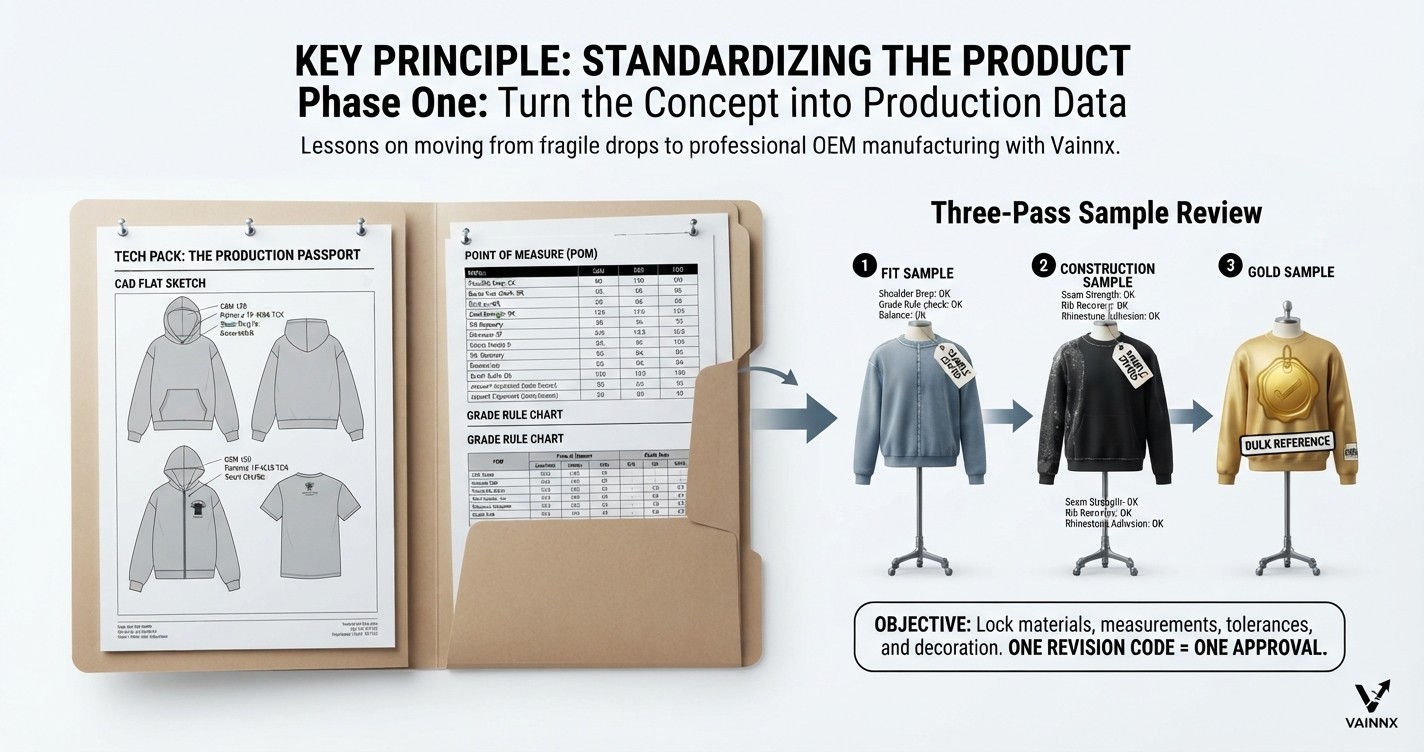
Executive summary: the scale-up problem
Starting point: 100 units and fragile processes
Choosing a manufacturing partner with evidence
Phase one: turn the concept into production data
1. Specification
2. Prototype
3. Gold sample
Phase two: prove a controlled 1,000-unit run
Phase three: scale capacity without losing consistency
Quality consistency at 10,000 units per month
Communication workflow that keeps decisions moving
What changed in the economics
Lessons for brands planning their own scale-up
FAQ: scaling with a B2B OEM partner
Can a startup go directly to 10,000 units?
How early should fabric be reserved?
Which decoration method is most reliable?
What should a factory report weekly?
Decision checklist before your next purchase order
Conclusion: make scale repeatable