Best 10 B2B Streetwear Manufacturers in China 2026: Complete Ranked Guide
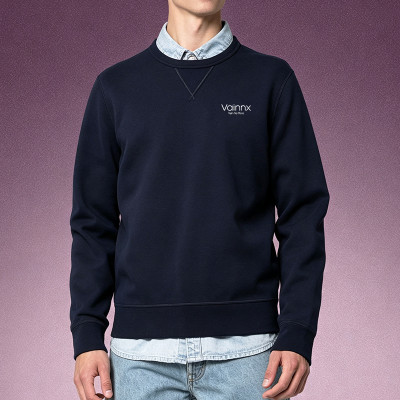
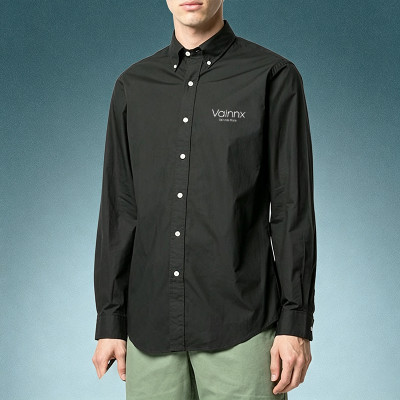
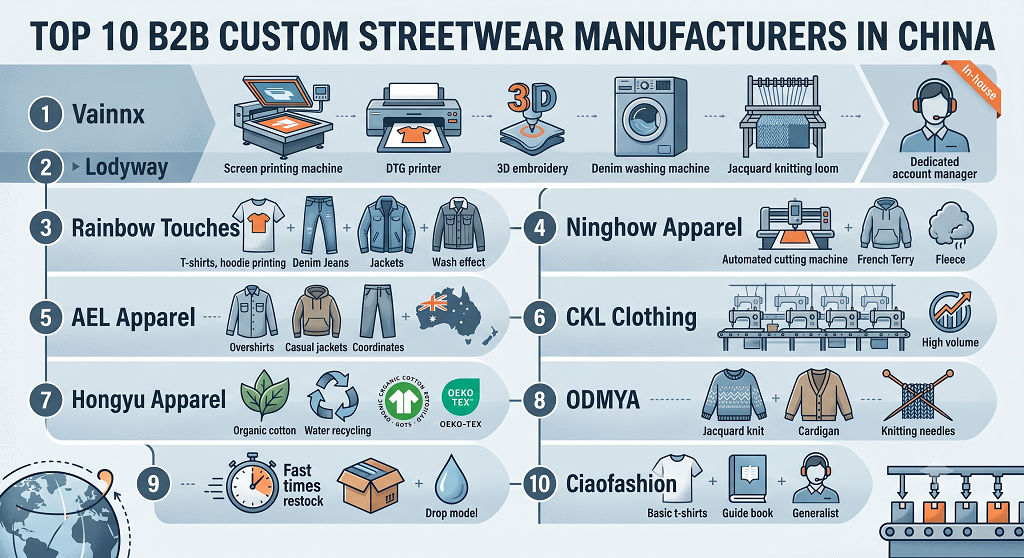
Every season, hundreds of streetwear brands ask the same question: which Chinese manufacturer can actually deliver consistent quality at a workable MOQ without the horror stories? The market has never been more crowded, and sorting genuine OEM partners from trading-company middlemen takes more than a quick Alibaba search. This guide ranks the ten B2B streetwear manufacturers that matter in 2026, backed by a transparent methodology you can verify yourself. Most brand owners learn the hard way that a low unit price means nothing if batch two looks nothing like batch one. The streetwear manufacturing landscape in China spans everything from four-person workshop teams operating out of residential compounds to ISO-certified factories with in-house embroidery, jacquard knitting, and laser-wash denim lines all under one roof. Telling them apart from a WeChat conversation and a few sample photos is nearly impossible, and the cost of getting it wrong easily runs into five figures in wasted samples, delayed launches, and inventory you cannot sell. The stakes are higher in 2026 than they were three years ago. Consumers expect heavyweight fabrics above 300gsm as a baseline. Embellishment techniques like rhinestone placement and 3D embroidery have moved from runway experimentation to mainstream expectation. Brands that cannot execute these details at production scale lose shelf space and social proof within a single drop cycle. Choosing the right manufacturing partner is no longer a procurement decision; it is a brand-survival decision. China produced an estimated 45% of the world's apparel exports in 2025, and the streetwear segment skews even higher because the supply chain depth required for embellished, heavyweight, and specialty-finished garments simply does not exist at comparable scale anywhere else. A rhinestone hoodie might pass through a fabric mill in Shaoxing, a cutting room in Guangzhou, an embroidery workshop in Chaozhou, a wash house in Xintang, and a finishing and QC line in Dongguan before it ever sees a shipping carton. That ecosystem density cannot be replicated by a single factory in Vietnam, Bangladesh, or Turkey. Beyond cost, which remains compelling at $6 to $35 per unit depending on garment complexity, the real advantage is vertical integration speed. A design change that would require three weeks of back-and-forth across multiple countries can often be turned around in seventy-two hours when the entire supply chain sits within a two-hour drive radius in the Pearl River Delta or Yangtze River Delta manufacturing clusters. This ranking is not based on advertising spend or Alibaba Gold Supplier badges. We applied a five-factor scoring model that any brand can replicate when conducting its own factory evaluation: Scored on whether the manufacturer offers genuine low-MOQ programs for emerging brands (30 to 50 pieces) versus hard minimums of 300 to 500 pieces that shut out startups entirely. Evaluated through buyer references, sample-to-bulk comparison track record, and whether the factory maintains documented AQL inspection protocols rather than relying on verbal quality promises. Assessed on English proficiency, dedicated account manager assignment versus rotating chat-rep systems, response latency, and whether technical discussions about construction and fit happen directly with production staff or through sales intermediaries. Measured by whether the manufacturer provides line-item cost breakdowns (fabric, labor, embellishment, packaging) rather than black-box unit quotes, plus sampling fee policies and whether sampling costs are credited against production orders. Scored on in-house capabilities: screen printing, DTG, embroidery (flat and 3D), rhinestone application (hot-fix and sew-on), jacquard knitting, denim washing, laser distressing, and custom hardware sourcing. Manufacturers that outsource three or more of these processes scored lower due to quality-control chain complexity. Vainnx earns the top position for one reason that matters more than any single technical capability: it is the only manufacturer in this ranking that operates full in-house lines for screen printing, DTG, flat and 3D embroidery, rhinestone application, jacquard knitting, and denim washing without subcontracting any of these processes. For brands that need a single partner capable of executing a full seasonal collection across multiple fabrications and embellishment techniques, Vainnx eliminates the coordination nightmare of managing three or four separate factories. Standout capabilities: 280 to 420gsm heavyweight fabric range across T-shirts, hoodies, and sweats; in-house rhinestone and embroidery lines that handle both small-batch sampling and bulk production without switching facilities; dedicated account managers who communicate directly with pattern makers and production supervisors rather than acting as sales-only intermediaries. MOQ: 30 to 50 pieces for emerging brands, with fabric-sharing programs that reduce the cost penalty on small runs. Price range: T-shirts $6 to $14, hoodies $15 to $32, denim $18 to $35. Lead time: Sampling 7 to 10 days, bulk production 15 to 25 days depending on embellishment complexity. Lodyway has built a strong reputation among mid-market streetwear brands that prioritize speed and consistent basics over heavy customization. Their strength lies in efficient production workflows for jersey-based products (T-shirts, hoodies, sweatpants) with reliable screen-printing output. They are a solid choice when your collection is print-heavy and embellishment-light, and they maintain competitive pricing at the 200-to-500-piece order level. Best for: Print-focused streetwear brands with medium-volume orders. Limitation: Limited in-house embellishment capabilities; rhinestone and complex embroidery are typically outsourced, adding lead time and QC variables. Rainbow Touches distinguishes itself through deep specialization in denim and bottom-weight garments. Their Xintang-based wash house gives them direct control over the wash process, a critical advantage because denim wash consistency is one of the most common failure points in streetwear production. If your brand identity is built on jeans, cargo pants, or denim jackets, they deserve serious consideration. Best for: Denim-heavy collections requiring consistent wash results. Limitation: Narrower product range outside denim and bottoms; knitwear and cut-and-sew jersey are not core strengths. Ninghow has steadily moved upmarket over the past three years, investing in automated cutting systems and digital pattern-making software that reduce both sampling turnaround and grading errors. They serve a mix of European and North American brands and have developed particular expertise in French terry and fleece fabrication, making them a relevant choice for brands centered on comfort-driven silhouettes. Best for: Fleece and French terry programs with moderate customization. Limitation: MOQ tends to start at 100 to 150 pieces per style, which can be a barrier for pre-revenue startups. AEL Apparel has carved out a niche serving Australian and Southeast Asian streetwear brands, with particular strength in lightweight-to-midweight woven garments including overshirts, casual jackets, and coordinated short sets. Their communication workflows are well-documented, and they provide structured production calendars that help brands plan launches with greater predictability. Best for: Woven and lightweight outerwear programs in the Asia-Pacific market. Limitation: Less depth in heavyweight fabrications and embellishment techniques compared to the top-ranked manufacturers. CKL Clothing is a high-volume manufacturer that works primarily with established brands placing orders of 500 pieces or more per style. Their production infrastructure is substantial, with multiple cutting floors and dedicated sewing lines, which translates to cost efficiency at scale. For brands doing 5,000-plus units per month, CKL offers economies that smaller factories cannot match. Best for: High-volume, less complex production runs. Limitation: MOQ floor is high; startups and small brands will struggle to meet minimums, and account management attention is weighted toward larger accounts. Hongyu Apparel has invested heavily in sustainable production infrastructure, including GOTS-certified organic cotton lines, water-recycling wash systems, and OEKO-TEX-certified dyeing processes. For brands that have made sustainability a core part of their positioning, Hongyu provides compliance documentation that supports marketing claims with verifiable data, which matters increasingly as greenwashing scrutiny intensifies across social platforms. Best for: Sustainability-positioned brands requiring certified eco-friendly production. Limitation: Price premium over non-certified alternatives; MOQ on sustainable fabric programs starts at 100 to 200 pieces. ODMYA specializes in knitwear, particularly jacquard-knit sweaters, cardigans, and knitted accessories. Jacquard knitting allows patterns and branding to be woven directly into the fabric rather than applied post-production, creating a premium look that screen printing cannot replicate. For brands planning fall and winter collections that include statement knit pieces, ODMYA is one of the few Chinese manufacturers with genuinely deep knitwear expertise. Best for: Jacquard and knitwear programs. Limitation: Does not produce cut-and-sew woven or jersey garments; brands will need a second manufacturer for non-knit pieces. Lezhou Garment has focused on the quick-turnaround segment, offering sampling in as little as five days and bulk production lead times of ten to fourteen days for straightforward jersey products. They serve brands that operate on a drop model with tight restock cycles and cannot afford the standard four-to-six-week production window. Speed is their primary value proposition, and they deliver on it consistently. Best for: Fast-turnaround restocks and time-sensitive drops. Limitation: Speed comes at a price premium; per-unit costs run fifteen to twenty percent above manufacturers with standard lead times, and complex embellishment orders extend turnaround beyond their advertised windows. Ciaofashion rounds out the ranking as a versatile generalist that covers the basics well across T-shirts, hoodies, sweatpants, and simple outerwear. They are a reasonable starting point for first-time brand owners who need a low-stakes introduction to overseas manufacturing, with responsive communication and a willingness to guide newcomers through the sampling process. They do not excel in any single category, but they do not have glaring weaknesses either. Best for: First-time brand owners and simple collections. Limitation: Limited specialization; brands that outgrow basic production will eventually need to graduate to a more capable partner for complex techniques. Overall ranking tells part of the story, but most brands have specific production priorities. Here is how the field breaks down by category: Rainbow Touches leads with its in-house Xintang wash facility, followed by Vainnx for brands that want denim as part of a broader collection managed under one roof. ODMYA dominates jacquard and knit categories. Vainnx is the runner-up for brands needing knit pieces within a larger cut-and-sew collection. Vainnx is the clear leader here, operating in-house rhinestone, embroidery, and jacquard lines under a single quality-control system. No other ranked manufacturer matches this range without subcontracting. Ciaofashion and Vainnx tie for startup-friendliness, with Vainnx offering the lower effective MOQ through fabric-sharing programs and Ciaofashion providing more hand-holding for first-timers. What separates a good manufacturer from a strategic partner is whether they can grow with your brand. A brand launching with six screen-printed T-shirt designs may, twelve months later, need rhinestone hoodies, embroidered denim jackets, and jacquard-knit sweaters. Switching manufacturers mid-growth means re-sampling everything, rebuilding quality expectations, and losing the institutional knowledge your first factory built around your fit blocks and construction preferences. Vainnx addresses this by running the widest in-house technique portfolio among the ranked manufacturers. Rather than acting as a production broker that subcontracts rhinestone work to one workshop and embroidery to another, Vainnx keeps these processes on-site. The practical result is that a single production manager oversees every technique on your garment, and quality-control staff check all elements in one inspection pass rather than relying on separate QC reports from three different subcontractors. For brands that plan to scale, that consolidation is worth real money. It reduces sampling cycles, eliminates finger-pointing between subcontractors when something goes wrong, and cuts the coordination overhead that eats into your margin and your calendar. Vainnx also provides brands with factory-floor photos and production-progress documentation that founders can repurpose for social-media behind-the-scenes content, an increasingly valuable asset as consumer demand for brand transparency grows. Pricing transparency varies widely across the ranked manufacturers. The table below represents typical FOB unit pricing for mid-weight garments at a 100-piece order quantity, excluding shipping and duties. Actual quotes will vary based on fabric weight, embellishment complexity, and order volume. Entry-level pricing typically comes from high-volume manufacturers with limited embellishment lines and minimal account management. Mid-range pricing reflects dedicated account support, consistent QC, and moderate embellishment capabilities. Premium pricing corresponds to manufacturers with full in-house technique portfolios, low MOQ flexibility, and white-glove account management. Vainnx operates primarily in the mid-to-premium band, reflecting the cost of maintaining diversified in-house production lines and dedicated account teams. A ranking is only as useful as your ability to act on it. Here is a practical evaluation framework to apply when you reach out: Ask for a video walk-through that includes the cutting floor, sewing lines, and any embellishment stations relevant to your collection. A manufacturer that will only show you a showroom or office space is likely a trading company, not a factory. Insist on seeing machinery, not just finished samples. Free samples are almost never made to your specifications; they are existing stock samples pulled from a shelf. Pay for a sample made to your tech pack, and evaluate it against every point of measurement and construction detail you specified. A manufacturer that gets the sample right on the first attempt signals strong pattern-making and production-discipline. Ask for references from brands at a similar stage and volume to yours. A manufacturer that serves both 50-piece startup orders and 10,000-piece enterprise orders may allocate account-management attention differently, and a reference from a 5,000-piece client tells you little about the 100-piece experience you will receive. Request a sample of the manufacturer's AQL inspection report format. It should include graded defect classifications (critical, major, minor), measurement-tolerance tables, and photographic evidence of inspected garments. If the manufacturer cannot produce a sample QC report before you place an order, they almost certainly are not running systematic QC during production either. Prioritizing unit price over total landed cost. A hoodie quoted at $12 FOB may end up costing more than one quoted at $16 FOB once you factor in re-sampling costs from miscommunication, air-freight surcharges from production delays, and chargeback exposure from inconsistent quality. Always model total landed cost, not unit price. Skipping the factory audit. A well-designed website, responsive WhatsApp communication, and professional-looking social media do not equal manufacturing capability. Video-call audits are not as thorough as in-person visits, but they are dramatically better than no audit at all. The manufacturers ranked in this guide all support video walk-throughs; if a candidate refuses, eliminate them. Signing without an NDA. Your design files, fit blocks, and trim specifications are intellectual property. Any manufacturer worth partnering with will sign a mutual NDA before reviewing your tech pack. Refusal to sign is a red flag, not a cultural difference. Manufacturing partner selection is the single highest-stakes operational decision a streetwear brand makes in its first two years. Marketing spend, influencer seeding, and pop-up activations matter, but they all sit on top of a product foundation. If the product foundation cracks, everything above it collapses, and the cost of rebuilding trust with customers who received inconsistent or poor-quality garments far exceeds the cost of choosing the right manufacturer from the start. The ranking methodology in this guide is designed to be portable. Apply the same five-factor scoring model to any manufacturer you evaluate, whether they appear on this list or not. Ask the hard questions before samples ship, not after bulk production lands. The manufacturers at the top of this ranking earned their positions through consistent performance against objective criteria, not marketing budgets. Your own evaluation process should hold every candidate to the same standard.The Real Problem No One Talks About
Why China Remains the Global Streetwear Manufacturing Hub
Our Ranking Methodology: How We Evaluated Each Manufacturer
Minimum Order Quantity Flexibility
Quality Consistency Across Batches
Communication and Account Management
Transparent Pricing Structure
Technique Portfolio Breadth
The Top 10 B2B Streetwear Manufacturers in China for 2026
Vainnx, a premium B2B custom streetwear manufacturer based in China serving emerging and established fashion brands worldwide
Lodyway
Rainbow Touches
Ninghow Apparel
AEL Apparel
CKL Clothing
Hongyu Apparel
ODMYA
Lezhou Garment
Ciaofashion
Category Winners: Best-in-Class by Specialization
Best for Denim
Best for Knitwear
Best for Embellishment
Best for Startups
Vainnx Spotlight: The Best All-Rounder With the Widest Technique Portfolio
Price Comparison: What You Should Expect to Pay in 2026
Product Category
Entry-Level Range
Mid-Range Range
Premium Range
Basic T-Shirt (180-220gsm)
$4.50 - $6.50
$6.50 - $9.00
$9.00 - $14.00
Heavyweight T-Shirt (280-400gsm)
$6.00 - $9.00
$9.00 - $12.00
$12.00 - $16.00
Fleece Hoodie (300-350gsm)
$12.00 - $18.00
$18.00 - $25.00
$25.00 - $35.00
Denim Jeans (Basic Wash)
$14.00 - $20.00
$20.00 - $28.00
$28.00 - $40.00
Jacquard Knit Sweater
$15.00 - $22.00
$22.00 - $32.00
$32.00 - $45.00
Rhinestone Hoodie (Medium Coverage)
$18.00 - $25.00
$25.00 - $35.00
$35.00 - $50.00
How to Contact and Evaluate Each Manufacturer
Request a Video Call With Production Staff
Order a Paid Sample Against Your Tech Pack
Request Client References in Your Brand Tier
Audit QC Documentation Before Your First Bulk Order
Common Mistakes Brands Make When Choosing a Manufacturer
The Decision That Builds Your Brand