5 Mistakes to Avoid When Partnering with an Overseas Streetwear Manufacturer
Introduction: Supply Chain Resilience in the Red Ocean of Streetwear
In today’s hyper-fast-paced global fashion marketplace, transforming your design concepts into physical, high-vibe garments with premium draping and texturing is the absolute lifeline for any streetwear label, independent fashion designer, social media influencer, or clothing e-commerce start-up. The meteoric rise of a contemporary clothing label often begins with a captivating visual narrative on social media channels like Instagram or TikTok, powered by high-concept lookbooks or viral styling videos. However, whether that brand survives the brutal retail gauntlet and establishes sustainable financial health depends entirely on a hidden reality: the core execution of its apparel supply chain.
For many clothing brands based in the United States, Europe, and other mature consumer economies, looking offshore to secure an overseas streetwear manufacturer with vertical supply chain capabilities, robust infrastructure, and a native grasp of urban subcultures is an exceptionally strategic move. Sourcing from a mature manufacturing hub unlocks deep benefits, including dense textile cluster ecosystems, highly skilled sewing artisans, and advanced wet-processing/dyeing capabilities that are simply unattainable domestically.
Yet, managing an international apparel supply chain is fraught with hidden hazards. Due to massive geographical distances, distinct cultural and corporate communication styles, divergent understandings of premium urban design aesthetics, and non-transparent production floors, many emerging labels and even mid-sized clothing enterprises step into critical "sourcing traps."
A minor structural mismatch in a dropped shoulder pattern, an inaccurate calibration of fabric shrinkage or Grams per Square Meter (GSM), an amateurish application of high-street graphic arts, or a desperate compromise on massive Minimum Order Quantities (MOQs) can single-handedly cause missing critical seasonal drop deadlines, drain operational capital, trigger devastating chargebacks, and permanently break customer trust.
As a premier overseas custom clothing manufacturer serving over 200 high-end streetwear and designer brand clients globally (Vainnx), we have engineered and optimized the supply networks of countless labels. We firmly believe that a top-tier clothing supplier shouldn't act as a blind, passive assembly plant that simply cuts and sews fabric matching a grid. Instead, a manufacturer must be a meticulous "technical translator" and a proactive "development partner" for your creative vision.
To help global streetwear entrepreneurs confidently navigate past these offshore pitfalls, we have compiled the 5 fatal mistakes to avoid when partnering with an overseas streetwear manufacturer, drawing directly from the battlefield experience of our 10-person dedicated R&D engineering team and our supply chain consultants with 20 years of textile experience.
Mistake 1: Prioritizing Cheap Unit Prices Over the Factory’s Grasp of "Streetwear Aesthetics" and High-Street Specialty Crafts
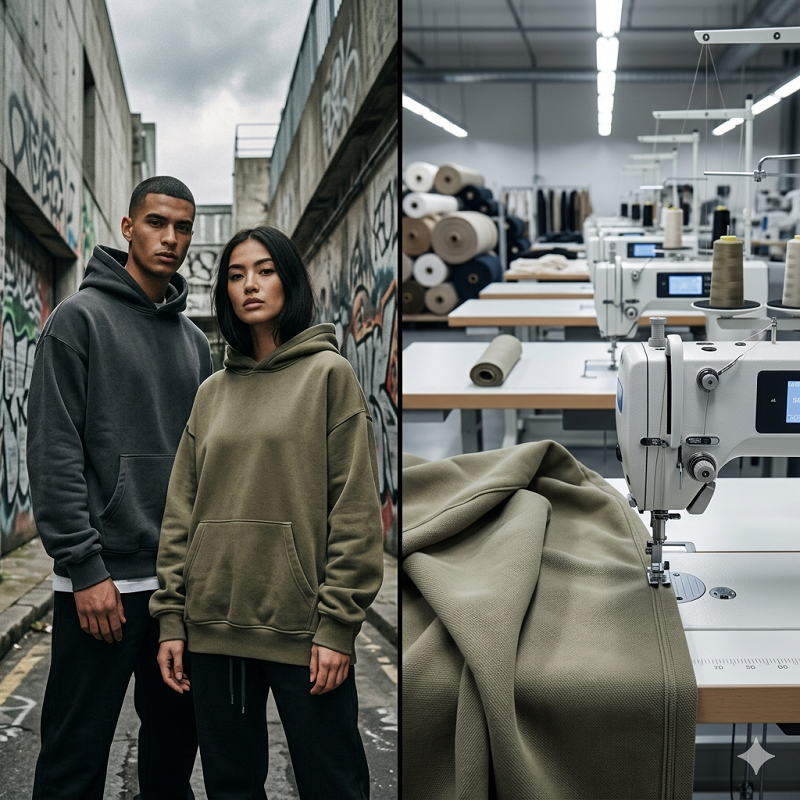
In traditional mass-market apparel manufacturing, the operational logic of a factory is straightforward: cut and sew fabric panels in strict alignment with a two-dimensional dimension chart. As long as the garment fits the broad body metrics and is free of structural tearing, it is deemed a passing grade. However, in the realm of premium streetwear and luxury urban apparel, this antiquated factory mindset yields total commercial failure. The entire market value of a streetwear garment is anchored in its architectural silhouette, its heavy drape, and the premium "vibe" engineered through meticulous detail.
Many brand owners fall into a spreadsheet trap during their initial sourcing rounds, prioritizing the lowest possible cost per garment (CMT quotes) and rapid promises. In doing so, they fail to evaluate whether the offshore factory natively understands the distinct pattern-making dialect, the complex physical behavior of heavy textiles, and the advanced post-processing chemistry required for authentic premium streetwear.
Why Do Standard Mass-Market Garment Factories Fail at Trendy Streetwear?
The essence of streetwear thrives on minute technical execution that old-school commercial factories often consider "improper" or "superfluous." When a standard factory takes on a streetwear tech pack, major technical failures consistently emerge across three core dimensions:
The Oversized & Dropped Shoulder Illusion: Standard factory pattern makers are trained to optimize fabric yield through slim or regular-fit tailoring. When presented with an intentional "oversized" streetwear tech pack, they frequently default to simply scaling up all grading parameters proportionally across the board. This yields an awful garment that is wide, boxy, and baggy in all the wrong places, featuring oversized armholes and loose hemlines that look sloppy rather than structural.
A specialized streetwear manufacturer like Vainnx, by contrast, operates on highly calibrated streetwear pattern specifications built from tracking hundreds of global urban projects. Our pattern masters know exactly how to adjust raglan sleeve angles, widen the armhole drop slightly, and tighten the hem ribbing tension to craft a structured, boxy silhouette that drapes beautifully on the body.
Ignorance of Heavyweight Fabric Mechanics: True luxury streetwear draws heavy inspiration from 90s skate, hip-hop, and workwear cultures, requiring dense, structural, high-GSM textiles. Standard commercial factories lack the specialized equipment and experience required to manage 400g, 500g, or 600g+ ultra-heavyweight combed cotton, dense French Terry, or heavyweight interlock fabrics.
Sewing heavy textiles requires precise needle gauges, exact stitch-per-inch (SPI) settings, and carefully calibrated machine thread tension. Inexperienced factories running these fabrics on unadjusted lines yield uneven seams, structural needle holes that snap cotton fibers (revealing white blemishes), or severe seam twisting and warp distortion after the first laundry wash.
The Breakdown of Complex Graphic Treatments: Modern streetwear designs rely heavily on highly tactile surface treatments. General clothing factories typically only feature basic, low-mesh screen printing or standard flat embroidery.
When an independent designer requests advanced executions such as high-density 3D puff printing, heavy mineral/acid washes, stone washing, vintage sun-faded distressing, high-definition Direct-to-Garment (DTG) printing, dense chenille embroidery, high-frequency voltage crackle prints, or manual hand-distressing, standard suppliers yield cheap, amateurish results. For instance, their puff printing often lacks the correct temperature and curing time, causing it to peel off in large flakes after a single domestic wash cycle. Their heavy acid washing might use improper chemical ratios, burning out the natural cotton fibers and leaving the fabric brittle and prone to immediate tearing.
Actionable Solution: Secure a "Development Partner" Instead of a Passive CMT Assembly Plant
When assessing an overseas custom apparel manufacturer, look past basic price quotes. A strategic brand owner must evaluate deeper operational competencies:
1.Does the factory have a verified track record in the streetwear sector? Demand to see physical archive garments or high-resolution case studies from real production runs executed for recognized streetwear or independent designer labels. For example, Vainnx has long functioned as the trusted supply backbone for multiple global urban labels, enabling us to translate complex designs from 90s vintage to Y2K aesthetics natively.
2.Does their engineering team offer proactive risk mitigation? A top-tier manufacturer will never blindly feed an unverified tech pack into their cutting machines. Vainnx deploys a 10-person dedicated R&D engineering team alongside senior supply chain planners with 20 years of technical expertise. Before mass production begins, they deconstruct your garment blueprints, analyzing fabric compatibility, seams, and graphic artwork placements. They map out production risks in advance—such as whether a high-pile embroidery will cause discomfort on the reverse side of a heavy loopback knit, or if a print will crack over a pocket seam—and provide valuable technical modifications and material alternatives before a single panel is cut, eliminating waste at the source.
Mistake 2: Surface-Level Transnational Communication and Over-Reliance on Unverified Electronic Tech Packs
In international apparel manufacturing, information asymmetry and cultural/linguistic context barriers stand as the premier drivers of production disasters. A common point of failure for independent designers and remote brand managers is falling into digital overconfidence. They believe that compiling a detailed vector tech pack in Adobe Illustrator, detailing measurements and text Callouts in English, and emailing it over as a high-res PDF means the overseas production line will replicate the item with 100% accuracy.
In reality, the gap between "what the designer imagined" and "what the factory floor supervisor interpreted" is often a grand canyon. A vector rendering that looks immaculate on an RGB laptop screen faces dozens of physical and chemical variables when exposed to real-world industrial textile dye vats, knitting machines, and high-temperature curing ovens.
The Three Classic Communication Disconnects in Offshore Sourcing
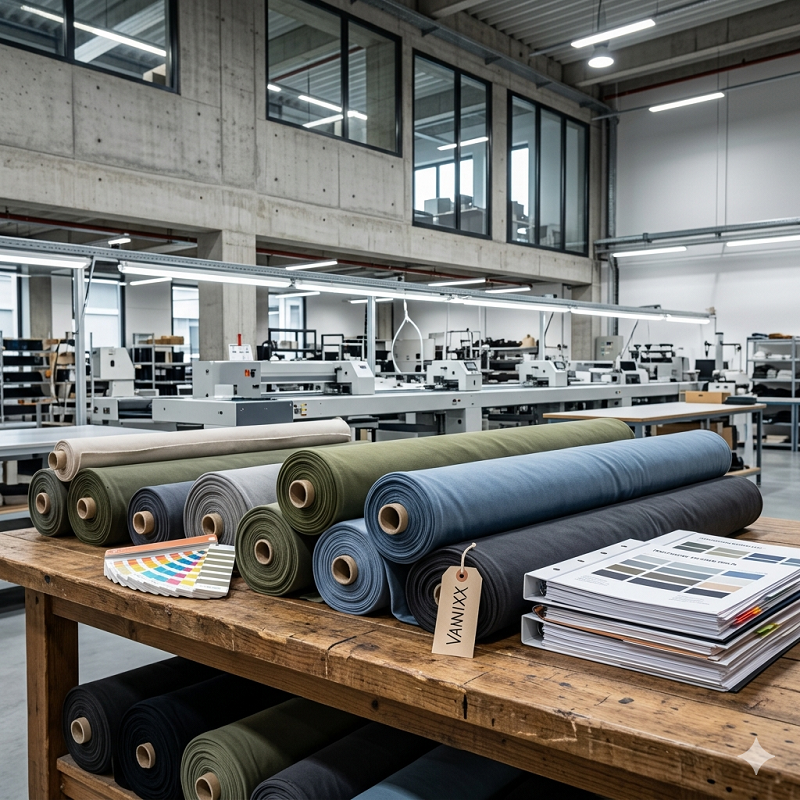
1.The Digital Color Illusion: A screen-rendered shade like "vintage sage" or "washed charcoal" shifts dramatically across different monitor color profiles and backlights. Without a universal, standardized color code framework, the factory's dyeing technicians are left guessing with the naked eye under erratic ambient lighting, leading to bulk fabric colors that vastly deviate from your brand identity.
2.The Tactile Blind Spot of Fabric Specification: Simply writing "100% Cotton" or "Heavy French Terry" on a digital sheet is vastly inadequate. Is it long-staple combed cotton, semi-combed cotton, or cheap, open-end cotton yarn? Has the fabric undergone singeing to torch away surface fuzz and pills? Is it treated with enzyme washes or silicone softeners for an ultra-premium hand feel? These tactile details dictate whether your $100-retail hoodie feels premium and buttery soft or rough, stiff, and cheap.
3.The Omission of Trimmings and Component Mapping: The luxury profile of a streetwear piece is solidified by its structural trimmings. The weaving density of your custom woven neck labels (ensuring it doesn't itch the skin), the placement and material of care labels, the paper board weight and debossing depth of hangtags, or the specific gauge and metal finish of zippers (such as authentic YKK hardware versus generic local stock) must be anchored with physical reference components. Otherwise, factories looking to streamline overhead will substitute low-grade, generic house stock trim.
Actionable Solution: Build a Digitized, Milestone-Driven Transparent Communication Protocol
To eliminate the anxiety of managing production across continents, you must secure an overseas apparel manufacturer that provides an integrated, one-stop transparent supply chain workflow. Looking at the Vainnx communication model, a standard offshore customization program must integrate several fail-safe loops:
Granular Tech Pack Alignment & Deconstruction: From the launch of your OEM/ODM product exploration, our supply chain managers initiate structural video calls or detailed technical briefs. We verify and lock down key production rules—such as graphic artwork scaling metrics across different size runs (S to XXL) and exact stitch-per-inch parameters (e.g., locking a premium high-street 11–13 SPI standard across all main seams)—ensuring your design intent is perfectly synchronized with the workshop floor.
Comprehensive Branded Trimmings Packaging Full Customization: True brand equity requires meticulous execution of all branding assets. Your manufacturer must provide exhaustive support for bespoke branding trimmings. At Vainnx, we supply full custom options including custom-branded matte frosted zipper poly-bags, high-density damask woven labels, eco-friendly satin care tags, and ultra-thick cardstock hangtags with spot UV or metallic stamping. Every trimming asset is physically sampled and verified before assembly line integration.
A "Visual Progress Bar" for Every Production Milestone: A premier overseas clothing supplier operates with radical transparency. Throughout your bulk manufacturing run, the factory must provide real-time updates via high-res imagery, video clips, or cloud-based milestone tracking. Vainnx maintains a strict reporting protocol, updating you as fabric arrives at our warehouse, as front panels clear the printing sub-contractors, during sewing line assembly, and throughout final steam pressing, giving you total peace of mind despite being time zones away.
Mistake 3: Skipping Physical Sampling to Save Money, or Rushing Bulk Production Without a Signed Pre-Production Sample (PPS)
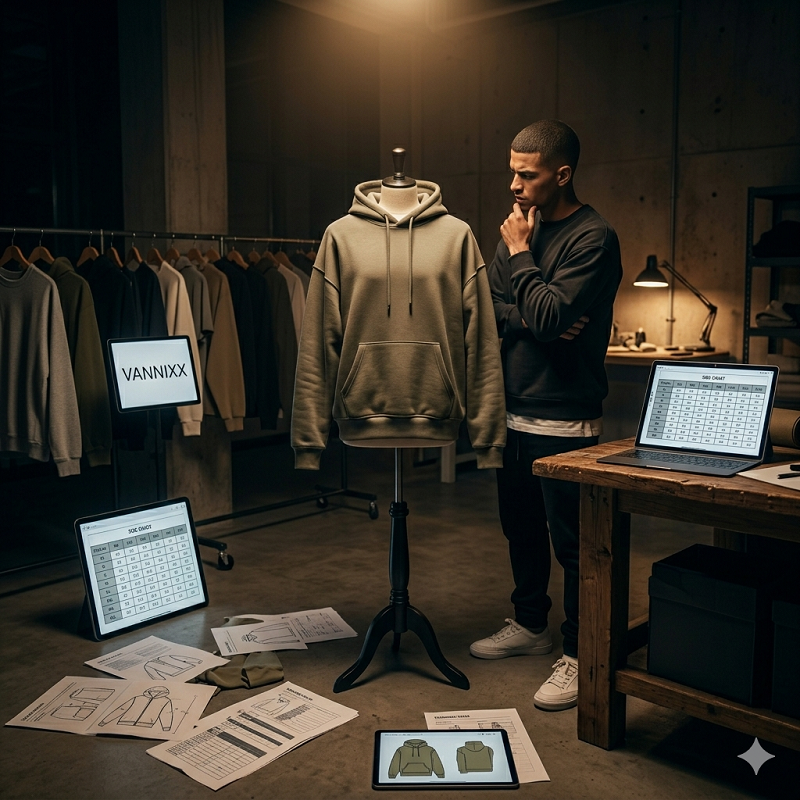
In the disciplines of apparel supply chain management and lean manufacturing, there is an absolute law that no brand owner can outrun: "Without verification through a physical sample, a flawless bulk production run is a mathematical impossibility."
Despite this, many startup clothing brand founders or e-commerce operators facing tight release timelines (chasing a summer festival drop, a Black Friday flash sale, a Halloween release, or a fashion week presentation) make a desperate, high-risk gamble. To save a week of transit time or a few hundred dollars in technical proofing fees, they skip the physical sampling phase entirely, or move into mass assembly line runs while knowing their initial sample has flaws, blindly relying on the factory's word to "fix it in bulk."
What is the Real Sunk Cost of Skipping a Sample?
Streetwear garments are fundamentally evaluated on how they behave dynamically on a moving body and their resilience through repeated wash cycles. A hoodie pattern that looks perfectly balanced on a 2D CAD grading grid will transform physically once executed in a dense 450g combed cotton loopback knit.
Launching Bulk Production Blindly is Financial Suicide: Skipping a physical sample eliminates your ability to perform crucial wear-ability and shrinkage tests. If the bulk run is finished and you discover that a giant back print causes the fabric to buckle and wrinkle across the shoulders, or that the premium dye bleeds heavily and shrinks the garment down by two full sizes, your entire production investment instantly transforms into worthless, dead stock inventory.
The Chaos of Verbal or Text Correction Logs: Another common point of failure is when a brand owner reviews a first sample, identifies flaws, but tries to fast-track production by texting the factory: "I got the sample. For the bulk run, just make the chest 2cm narrower, extend the body length by 3cm, shift the front puff print 1cm to the left, and go straight to bulk. Everything else is fine." This is an operational recipe for disaster.
A garment is a complex three-dimensional tension system. Altering one baseline measurement triggers a domino effect across armhole curves, shoulder slopes, and neck circumferences. Without executing a dedicated Pre-Production Sample (PPS) to visually close the modification loop, workers on the assembly line will inevitably misinterpret the instructions, leading to catastrophic bulk defects.
Actionable Solution: Ally with an Agile Overseas Factory Capable of High-Velocity Sampling
The technical agility and engineering capability of an overseas clothing manufacturer are directly proven by the independence of its sample technical room, its proofing velocity, and its precision in executing complex iterations.
1.Velocity and Technical Consultation: In the competitive streetwear ecosystem, speed dictates market capture. A premier factory must operate a dedicated sample room completely decoupled from the chaotic schedules of mass production lines. Vainnx leverages this operational setup to deliver an ultra-fast 3-day turnaround for Ready-Made rapid graphic proofing, 1 week for standard custom styles, and a strict 2-week deadline for highly complex, bespoke Custom-Made samples. This rapid feedback loop enables designers to adjust silhouettes in real time with zero down-time.
2.An Inflexible Standard Operating Procedure for PPS Sign-Off: Within Vainnx’s production framework, we enforce a strict mandate across all client accounts: regardless of how compressed your launch window is, a final Pre-Production Sample (PPS) must be fully reviewed and validated before mass cutting begins. The PPS undergoes rigorous tensile strain checks, colorfastness washing evaluations, and anti-pilling cycles. Once it passes all technical thresholds and earns the brand owner’s physical sign-off, that specific garment is locked on the production floor as the undisputed Golden Sample. It serves as the sole quality standard for the entire assembly line, driving production variance down to zero.
Mistake 4: Chasing Traditional Mega-Factories While Sacrificing Supply Chain Agility and Sustainable Low-MOQ Strategies
A pervasive psychological trap for newcomers to the apparel enterprise is equating a factory's competence solely with massive real estate footprints, thousands of factory workers, or endless rows of automated sewing machines. Entrepreneurs often spend months cold-emailing massive industrial conglomerates that manufacture apparel for global fast-fashion or athletic giants like Nike, Adidas, Gap, or Zara.
What these brand owners miss is a stark operational reality: in the modern era of community-driven streetwear commerce and scarcity-based "Limited Drops," an old-school mass-production mega-factory is not an advantage—it is an operational mismatch that can easily bankrupt an independent label.
Why Corporate Mass-Production Factories Act as Silent Killers for Independent Labels
The Inaccessible Minimum Order Quantity (The MOQ Trap): Mega-factories run automated cutting systems and high-capacity screen print lines optimized exclusively for tens of thousands of identical units per run. To amortize their heavy setup costs and scheduling overhead, their strict MOQs typically start at 1,000 to 3,000 units per style/color.
For a premium streetwear brand whose entire business model relies on limited quantities, high style diversity, and rapid market testing via small batches, these huge MOQs completely lock up working capital and create immense dead stock liabilities.
The "Low-Priority" Backlog Nightmare: On a production floor housing thousands of operators, an independent label's order of a few hundred pieces is an afterthought. Within the factory's client hierarchy, your brand will always sit at the lowest priority tier.
The moment a corporate giant like Nike submits a sudden rush reorder, the mega-factory will pause your machines without hesitation, pushing your completion date back by weeks. You may find your inventory trapped in a production backlog while your peak seasonal sales window—such as Cyber Monday or the holiday shipping rush—slips away entirely, and you will receive little to no communication from their corporate account managers.
Zero Agile Quick-Response Capabilities: The modern DTC streetwear formula relies on a lean strategy: "Test small, read data fast, restock instantly." Brands drop an initial small batch to capture organic social algorithms and gauge add-to-cart conversions. If a specific graphic variant sells out within hours, the supply chain must be capable of injecting a fresh batch into the market within 10 to 15 days. This data-driven agility is completely impossible within the rigid, quarters-long scheduling matrices of old-school mega-factories.
Actionable Solution: Align with a Modern, Flexible Manufacturer Supporting Agile Low-MOQ Customization
In today's fast-moving digital marketplace, the ultimate supply chain advantage belongs to apparel brands that secure an overseas partner combining the industrial precision of large-scale manufacturing with the lean flexibility of small-batch production (Agile & Lean Manufacturing).
Empowering Low-MOQ Frameworks for Independent Labels: Vainnx understands the operational pressures and cash flow dynamics of independent fashion commerce. We have broken down traditional industrial barriers by engineering a highly flexible, low MOQ custom apparel path starting from 50–100 pieces.
Whether you leverage our Ready-Made track (50–100 pieces per style/color utilizing premium, pre-shrunk house fabrics for rapid pattern adjustments and fast graphic printing) or our Custom-Made track (100 pieces for bespoke yarn-dyeing, customized textile milling, and intricate custom cut-and-sew blueprints), your label can test new markets with minimal financial risk, completely avoiding dead-stock anxiety.
High-Velocity Quick-Replenishment Reorder Fulfillments: Utilizing an integrated agile supply ecosystem—ranging from an in-house inventory of multiple tons of high-GSM raw streetwear textiles in trending colorways to high-capacity digital print rooms—Vainnx can fulfill flexible bulk reorders in just 7 to 15 days. This exceptional responsiveness empowers your brand to capture viral traffic effortlessly without ever carrying the burden of excessive inventory overhead.
Mistake 5: Failing to Verify Structural Quality Control (QC) Processes and Global Logistics, Causing "Last-Mile" Operational Collapse
When the sewing lines finally halt, and thousands of custom garments are neatly finished and stacked on the factory floor, inexperienced brand owners often celebrate, thinking the hard work is done. However, in transnational apparel commerce, the completion of sewing represents only 70% of the journey. The final two phases, often overlooked as minor back-office logistics, are hidden minefields: the absence of a multi-tiered quality inspection framework and chaotic international customs clearing and logistics execution.
The Two Invisible Landmines of Late-Stage International Sourcing
1.Bulk Production Quality Drift (The Bait-and-Switch): Transnational sourcing carries the risk of a factory delivering a luxury sample but producing a low-grade bulk run. Unscrupulous small-tier factories may use premium combed cotton for your sample to win the contract, but quietly substitute cheaper, short-staple yarn that pills instantly for the mass run.
Alternatively, as shipping deadlines near, rushed factory workers may compromise on stitching, leaving loose threads, skipped stitches, oil stains from processing machinery, or dimensions that drift entirely out of your size tolerances. Shipping unverified, defective apparel directly to global consumers will trigger a flood of negative reviews and return rates exceeding 20%, erasing your margins.
2.The Customs Black Hole and Punitive Port Tariffs: Apparel is a heavily regulated product category globally. Customs authorities in regions like the United States, United Kingdom, and European Union enforce complex import compliance standards, fiber content labeling laws, and strict documentation demands (such as accurate Certificates of Origin and Harmonized System (HS) code classifications).
If your overseas clothing manufacturer lacks deep expertise in international shipping compliance and makes a single typographic error on a commercial invoice or packing list, your cargo can be held indefinitely at the port of entry. This triggers daily demurrage fees running into hundreds of dollars, causes you to miss your marketing windows, or risks seizure and destruction by customs authorities.
Actionable Solution: Partner with a Manufacturer Utilizing a 6-Stage Quality Assurance System and End-to-End DDP Logistics
A truly dependable overseas streetwear manufacturer must provide complete peace of mind, maintaining total quality control and structural transparency from the factory floor to the destination warehouse:
1.A Multi-Stage Quality Inspection Framework: At Vainnx, we never sacrifice structural quality for speed. We protect every production run with a meticulous 6-Stage Quality Assurance System embedded across the assembly line:
Stage 1: Fabric Inspection upon Inward Delivery (Verifying GSM, color matching, and shrinkage metrics);
Stage 2: Precision Cut-Panel and Pre-Printing Inspection (Ensuring perfect alignment of graphics);
Stage 3: In-Line Assembly Line Audits (Monitoring stitch tension and SPI consistency);
Stage 4: Post-Sewing Initial Full Inspection (Trimming thread tails and identifying skipped stitches);
Stage 5: Post-Ironing and Washing Comprehensive Audit (Verifying final dimensions against the size chart);
Stage 6: Final Outgoing Quality Control (OQC) prior to container sealing.
Vainnx stands firmly behind our manufacturing quality. We completely support and welcome client-appointed third-party international auditing agencies (such as SGS, Intertek, or Bureau Veritas) to conduct on-site random sampling or full pre-shipment inspections at our facility.
2.Bespoke Branded Packaging and Seamless End-to-End DDP Global Shipping: The supply chain is only complete when your customer opens their package and sees your branding executed flawlessly. Vainnx provides extensive visual content and custom branded packaging support, alongside deep integrations with top-tier international logistics networks.
We configure optimized shipping strategies based on your timeline and budget—spanning rapid Air Freight, economical Ocean Freight, sea-to-truck combinations, and express parcel shipping via DHL, FedEx, and UPS. Crucially, we offer Delivered Duty Paid (DDP) all-inclusive shipping lines. Our logistics specialists manage all international customs clearance, import documentation, and tariff payments, while providing real-time order tracking updates. This ensures your custom apparel arrives safely, on schedule, and retail-ready at your warehouse, retail stores, or international fulfillment centers.
Conclusion: The Strength of Your Supply Chain Dictates the Horizon of Your Streetwear Label
In the competitive world of contemporary fashion, a premium streetwear brand is far more than an assembly of textile panels and graphic screen prints. It is a living cultural movement, an urban lifestyle statement, and an artistic medium for a global community. An independent designer's creative concepts, raw cinematic lookbooks, and viral social media traction are the wings of a brand. But the backbone that allows those wings to fly high and endure market pressures is the structural execution of your apparel supply chain.
Strategic brand owners avoid the 5 fatal sourcing mistakes. They refuse to compromise quality for low-ball quotes, build transparent, digitized communication protocols with their overseas partners, respect the Pre-Production Sample (PPS) validation sequence, align with agile manufacturers offering sustainable low MOQs, and enforce strict quality control paired with secure end-to-end global logistics. These supply chain choices elevate a label above the noise of a crowded retail space, transforming an independent studio into an enduring global phenomenon.
As a design-driven, customer-centric ODM/OEM custom clothing manufacturer, Vainnx is fully dedicated to serving as your technical supply chain partner. From heavy-weight graphic T-shirts, heavy-fleece hoodies, and structural sweatshirts to technical jackets, cargo pants, premium custom tracksuits, and custom knit sweaters, we combine robust vertical manufacturing infrastructure, a 6-stage quality assurance layout, and rapid 3-day sample proofing.
Ready to bring your streetwear concepts to life with professional manufacturing precision?
Explore our full textile libraries and processing techniques at the official Vainnx Website, or consult directly with our senior apparel sales planning team at info@vainnx.com. Let’s eliminate your offshore sourcing risks and co-create the next global streetwear icon!
📞 Phone: [86-15015158179]
📧 Email: [info@vainnx.com]
🌐 WhatsApp:[https://wa.me/8618025298509]
Click the link above to start designing your custom streetwear today. We can’t wait to help you express your bold style!